Die Träumenden Knaben
Kokoschka, Oskar
Wien. Berger und Chlawa fur die Wiener Werstätte. 1908
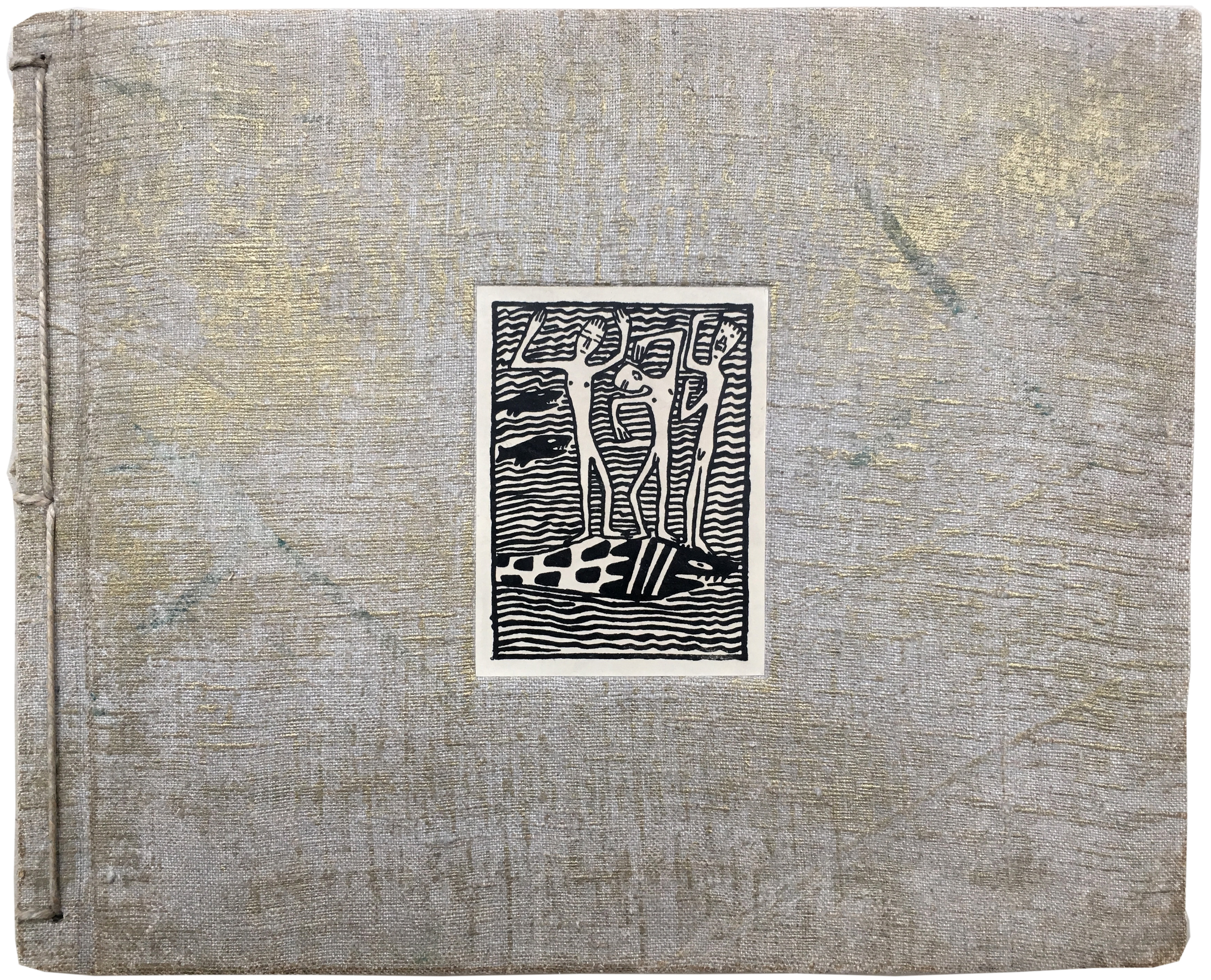
First edition, first issue - with the black lithograph label and gold paint splatter - of Kokoschka's colourful masterpiece.
From the proposed edition limited to 500 copies - many fewer copies were issued.
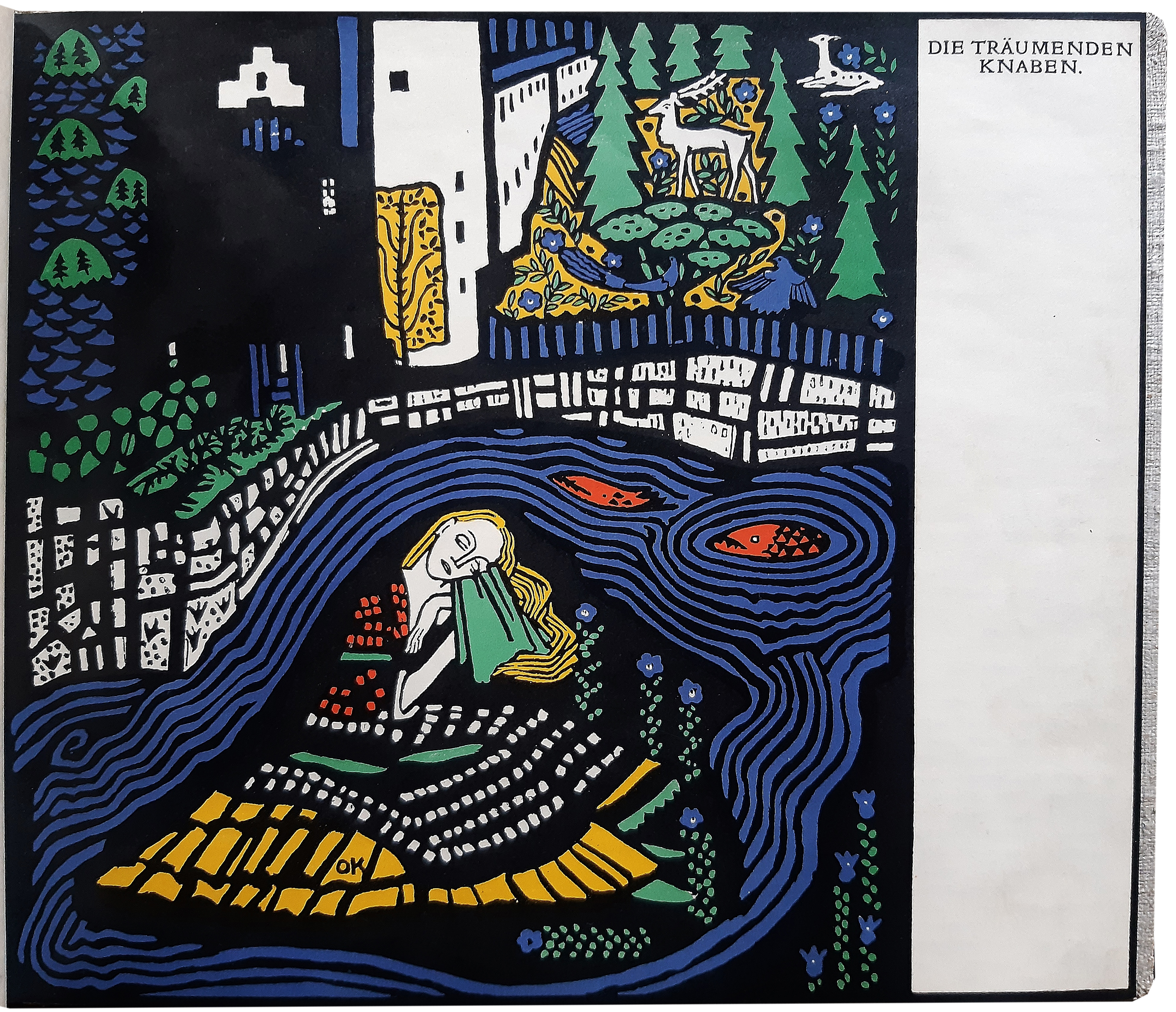
Oskar Kokoschka's 'Die Träumenden Knaben' (The Dreaming Youths) features his own original lithographs to illustrate his own text. Kokoschka's illustrations, with their bold, flat colour mark the border of Jugendstil and Expressionism while his flowing, symbolist verse is far from the childrens' story for which he was commissioned. This example is from the rare first edition published by the Wiener Werkstatte who had commissioned the book before the sheets were sold off to Kurt Wolff and reissued with a different binding in 1917.
'In this, his [Kokoschka's] first graphic work, the decorative influence of the Jugendstil and folk art is apparent. The Wiener Werkstätte had commissioned him to write and illustrate a book for children and Die Traeumenden Knaben was shown in the 1908 Kunstschau, where Kokoschka's work was exhibited for the first time. Only a handful of copies was sold at that time and the book was reissued in 1917 by Kurt Wolff.' (The Artist and the Book).
'In the work Kokoschka seeks to follow the dreams of a young adolescent boy, the strong colours of the lithographs providing an exotic landscape to support the text. In his autobiography, the artist states his intention to have been to create a 'picture poem'. The work is dedicated to Gustav Klimt, who had left the Vienna Secession in 1905 and whose work was a powerful influence on Kokoschka at the time.' (From Manet to Hockney).
'Ausgabe 1908: Die Blätter sind albumartig gebunden. Der Leinenüberzug der Einbanddecke its mit Goldfäden durchwirkt.' (WIngler / Welz).
[Wingler / Welz 22 - 29; The Artist and the Book 147; From Manet to Hockney 24].
From the proposed edition limited to 500 copies - many fewer copies were issued.
Oskar Kokoschka's 'Die Träumenden Knaben' (The Dreaming Youths) features his own original lithographs to illustrate his own text. Kokoschka's illustrations, with their bold, flat colour mark the border of Jugendstil and Expressionism while his flowing, symbolist verse is far from the childrens' story for which he was commissioned. This example is from the rare first edition published by the Wiener Werkstatte who had commissioned the book before the sheets were sold off to Kurt Wolff and reissued with a different binding in 1917.
'In this, his [Kokoschka's] first graphic work, the decorative influence of the Jugendstil and folk art is apparent. The Wiener Werkstätte had commissioned him to write and illustrate a book for children and Die Traeumenden Knaben was shown in the 1908 Kunstschau, where Kokoschka's work was exhibited for the first time. Only a handful of copies was sold at that time and the book was reissued in 1917 by Kurt Wolff.' (The Artist and the Book).
'In the work Kokoschka seeks to follow the dreams of a young adolescent boy, the strong colours of the lithographs providing an exotic landscape to support the text. In his autobiography, the artist states his intention to have been to create a 'picture poem'. The work is dedicated to Gustav Klimt, who had left the Vienna Secession in 1905 and whose work was a powerful influence on Kokoschka at the time.' (From Manet to Hockney).
'Ausgabe 1908: Die Blätter sind albumartig gebunden. Der Leinenüberzug der Einbanddecke its mit Goldfäden durchwirkt.' (WIngler / Welz).
[Wingler / Welz 22 - 29; The Artist and the Book 147; From Manet to Hockney 24].
[10 leaves]. Oblong 4to. (244 x 298 mm). Illustrated with 10 original lithographs by Oskar Kokoschka, 8 in colour, all printed recto only (the label for the cover is also an original lithograph). Original publisher's cloth with pasted on label with lithograph by Kokoschka in black and gold paint splatter.
#48703