Histoire Naturelle
Ernst, Max. Arp, Hans, (Intro.)
Paris. (Editions Jeanne Bucher). 1926
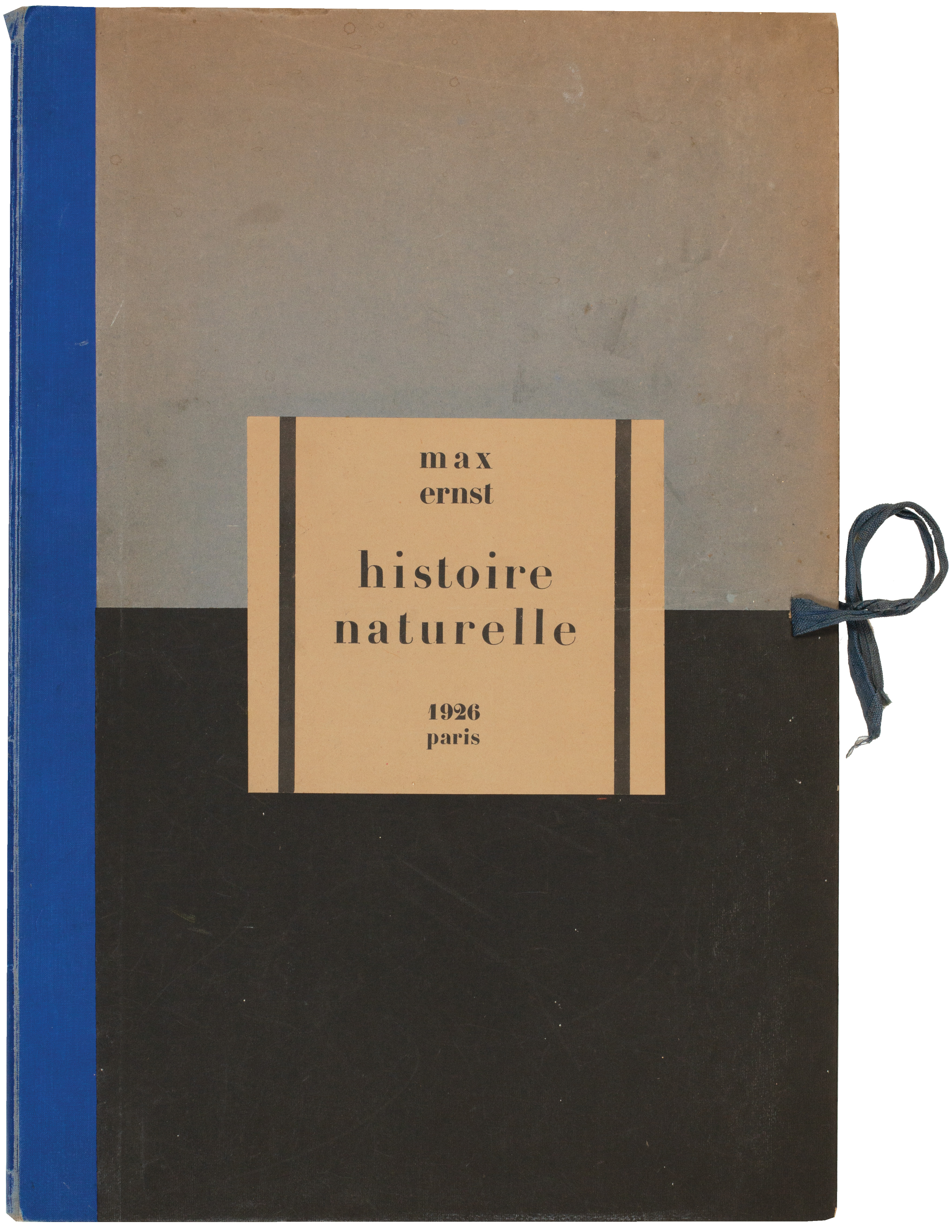
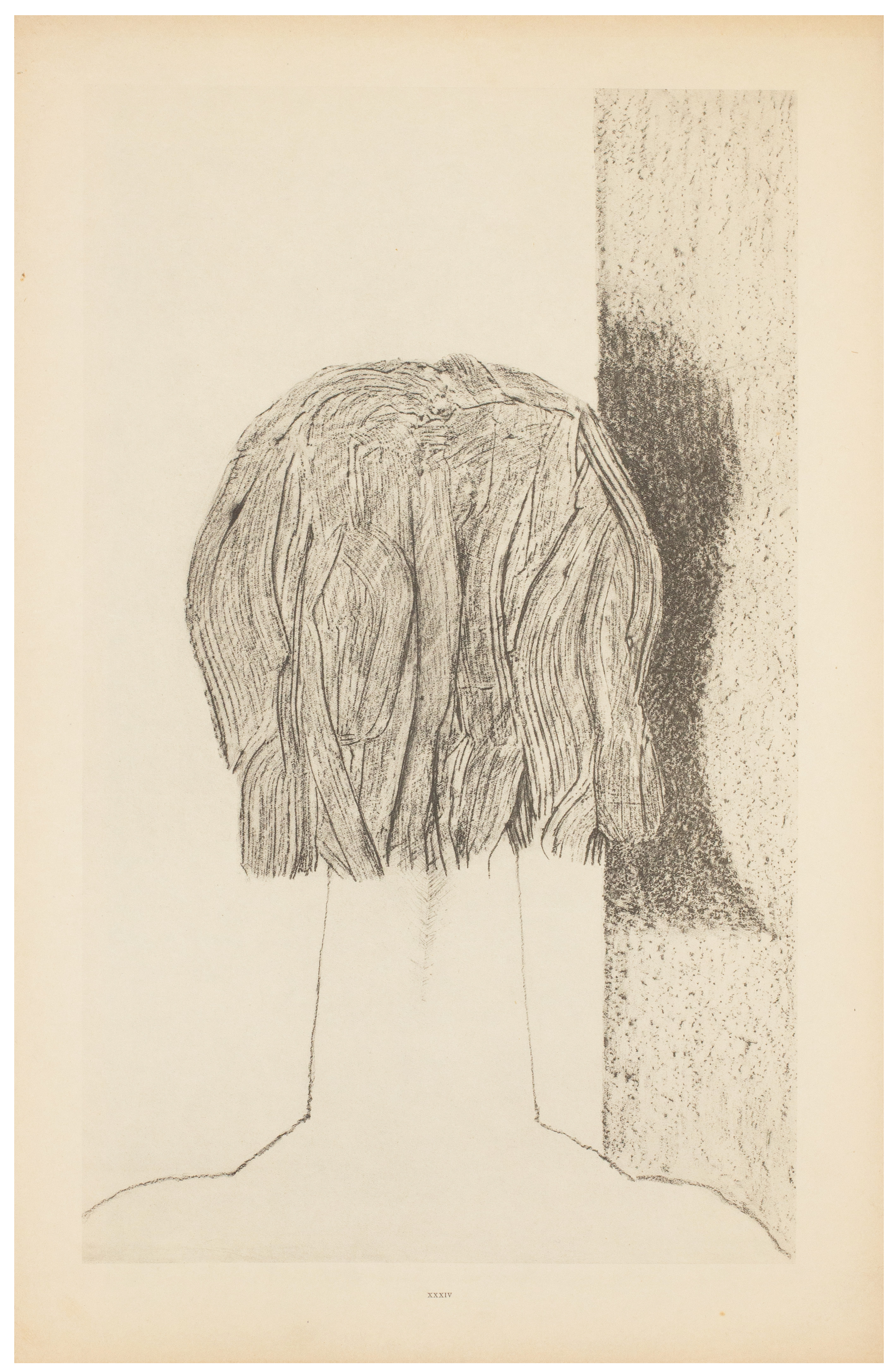
A superlative unsophisticated édition de tête example of exceptional rarity of Max Ernst's early frottage experiments.
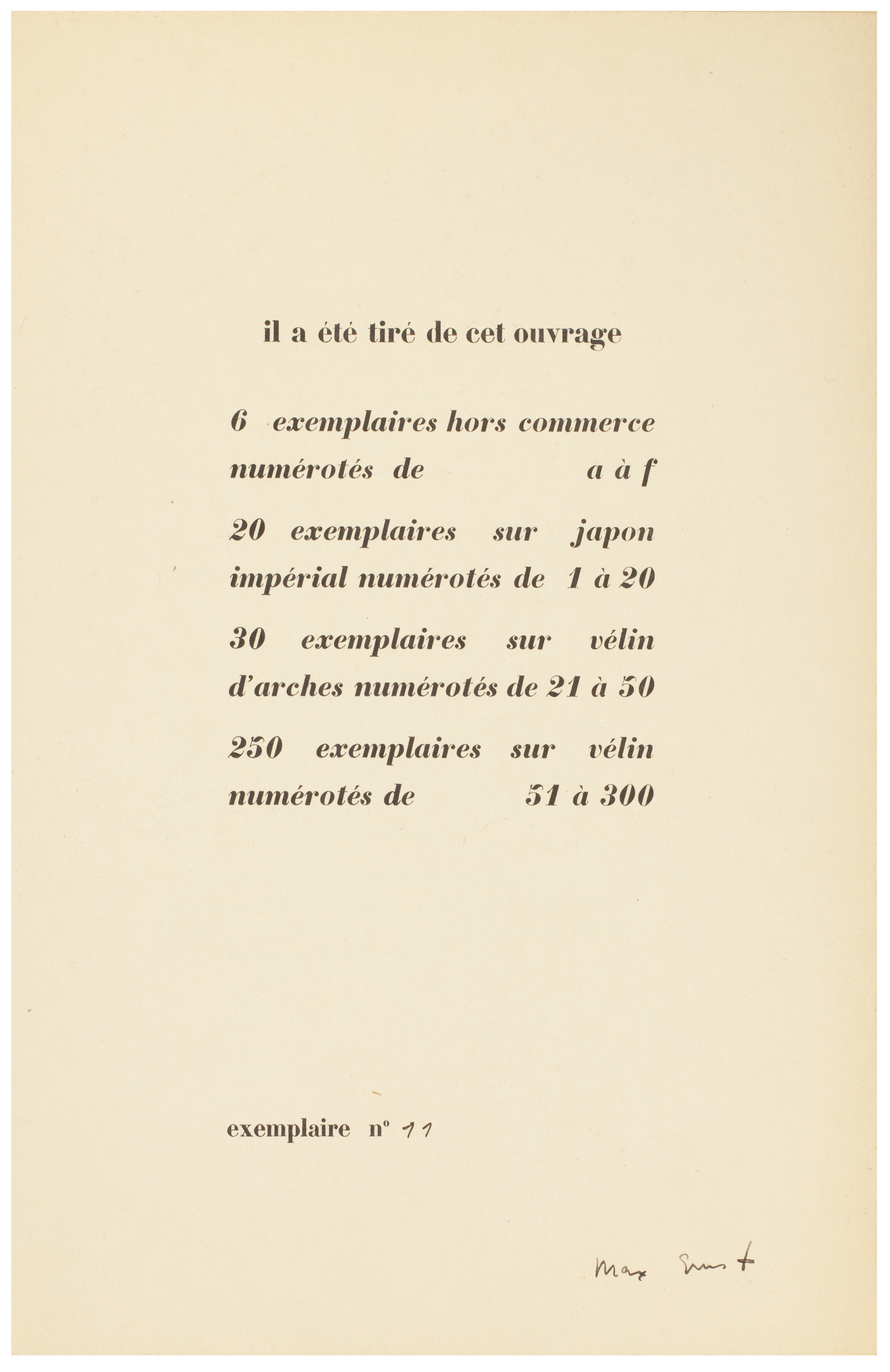
From the edition limited to 300 numbered copies (6 lettered hors commerce copies were also issued), with this one of the first 20 édition de tête copies on Japon Impérial signed and numbered '11' in ink by Max Ernst.
'Ici encore la surréalité et non la réalité reprendra ses droits.' (André Breton).
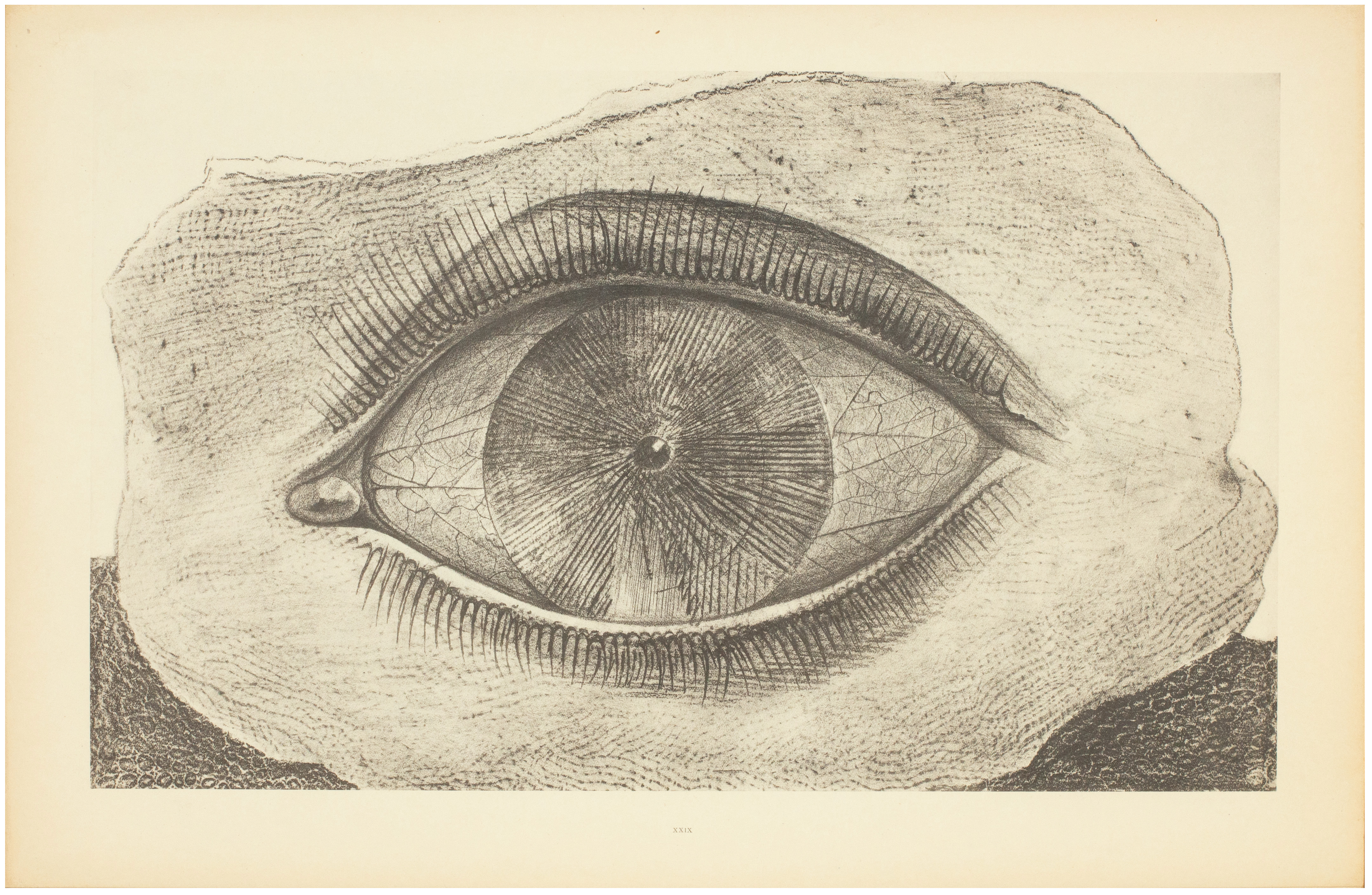
One of Ernst's earliest childhood recollections was of an imitation mahogany panel opposite his bed which he was prone to peruse while falling asleep. Such an image helped spark his invention of frottage (rubbings of diverse materials such as planks, bricks, watch parts, cheese graters, buttons, etc.).
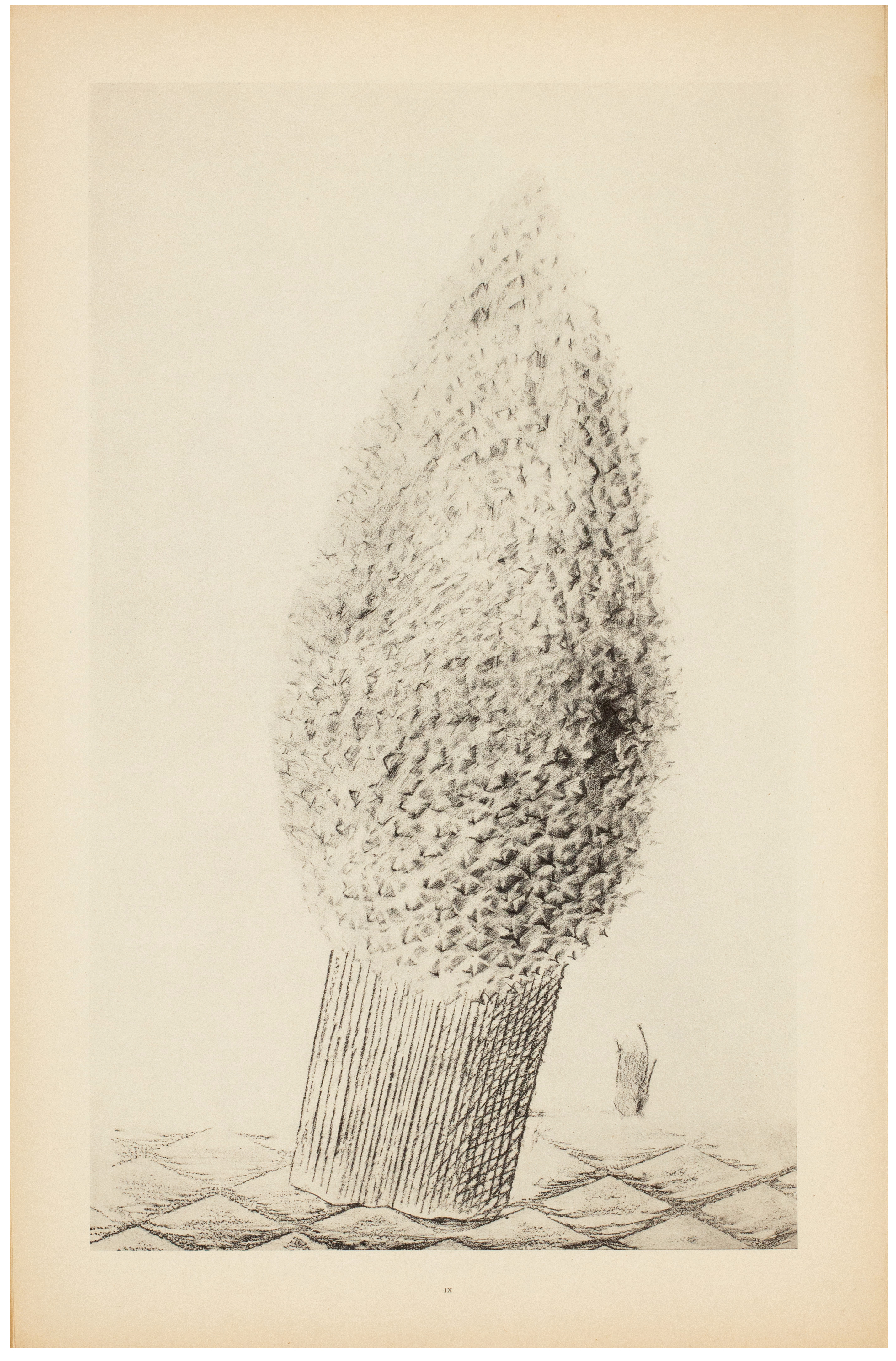
Made during the latter half of 1925, this album represents only a small portion of the hundreds of frottages Ernst produced during that period. Bearing both poetic and descriptive titles (The Fascinating Cypress, The Vaccinated Bread), the plates are introduced by Ernst's dada compatriot Hans Arp by means of a long automatic prose poem. The text is printed without capitals throughout; the final plate ('éve la seule qui nous reste') is misnumbered '43' in the list of plates.
'vous voyez donc qu'on ne consume monsieur son père que tranche par tranche. impossible d'en finir en un seul déjeuner sur l'herbe et le citron même tombe à genoux devant la beauté de la nature.' (arp's final paragraph in the 'introduction').
'Sans aucune doute l'ouvrage le plus beau dû à la technique du 'frottage', inventée par Max Ernst, comme équivalent pictural à l'écriture automatique.' (see catalogue de la Bibliothèque Daniel Filipacchi, Première Partie').
Copies of 'Histoire Naturelle' on Japon Impérial paper from the édition de tête, as here, are of exceptional rarity. As with Max Ernst's other early books, such as 'La Femme 100 Têtes' and 'Rêve d'une Petite Fille qui Voulut Entrer au Carmel' which were also issued in the édition de tête in small numbers on Japon Impérial, copies appear very rarely on the market. We can locate only three other examples on the market in the last 30 years: the Filipacchi édition de tête copy of Ernst's Histoire Naturelle, sold at Christie's Paris in 2004, a copy sold at Ketterer Kunst Doerling in 2016 and the copy of Jean-Paul Kahn sold at Pierre Bergé et Associés, 2020.
'Histoire Naturelle' was the second book published by the legendary gallerist and publisher Jeanne Bucher (1872 - 1946) after Jean Lurçat's 'Baroques' (1925). Bucher would publish some of the most important works of Surrealism including Miro's first book 'Il était une petite pie' (1928), Max Ernst's 'Une semaine de bonté' (1934), Hugnet and Duchamp's collaboration 'La septième face du dé' (1936), Eluard and Man Ray's 'Les mains libres' (1937) and Hans Bellmer and Hugnet's 'Oeillades ciselées en branche' (1939) among others.
[see 'La Révolution Surréaliste', no. 9 / 10, 1927, pg. 41; see lot 112, 'Bibliothèque Daniel Filipacchi, Première Partie', Christie's Paris, Jeudi 29 Avril, 2009; see lot 107, 'Mille Nuits de Rêve, Collection Genebviève et Jean-Paul Kahn II', Pierre Bergé et Associés, Paris, Vendredi 9 Octobre, 2020].
From the edition limited to 300 numbered copies (6 lettered hors commerce copies were also issued), with this one of the first 20 édition de tête copies on Japon Impérial signed and numbered '11' in ink by Max Ernst.
'Ici encore la surréalité et non la réalité reprendra ses droits.' (André Breton).
One of Ernst's earliest childhood recollections was of an imitation mahogany panel opposite his bed which he was prone to peruse while falling asleep. Such an image helped spark his invention of frottage (rubbings of diverse materials such as planks, bricks, watch parts, cheese graters, buttons, etc.).
Made during the latter half of 1925, this album represents only a small portion of the hundreds of frottages Ernst produced during that period. Bearing both poetic and descriptive titles (The Fascinating Cypress, The Vaccinated Bread), the plates are introduced by Ernst's dada compatriot Hans Arp by means of a long automatic prose poem. The text is printed without capitals throughout; the final plate ('éve la seule qui nous reste') is misnumbered '43' in the list of plates.
'vous voyez donc qu'on ne consume monsieur son père que tranche par tranche. impossible d'en finir en un seul déjeuner sur l'herbe et le citron même tombe à genoux devant la beauté de la nature.' (arp's final paragraph in the 'introduction').
'Sans aucune doute l'ouvrage le plus beau dû à la technique du 'frottage', inventée par Max Ernst, comme équivalent pictural à l'écriture automatique.' (see catalogue de la Bibliothèque Daniel Filipacchi, Première Partie').
Copies of 'Histoire Naturelle' on Japon Impérial paper from the édition de tête, as here, are of exceptional rarity. As with Max Ernst's other early books, such as 'La Femme 100 Têtes' and 'Rêve d'une Petite Fille qui Voulut Entrer au Carmel' which were also issued in the édition de tête in small numbers on Japon Impérial, copies appear very rarely on the market. We can locate only three other examples on the market in the last 30 years: the Filipacchi édition de tête copy of Ernst's Histoire Naturelle, sold at Christie's Paris in 2004, a copy sold at Ketterer Kunst Doerling in 2016 and the copy of Jean-Paul Kahn sold at Pierre Bergé et Associés, 2020.
'Histoire Naturelle' was the second book published by the legendary gallerist and publisher Jeanne Bucher (1872 - 1946) after Jean Lurçat's 'Baroques' (1925). Bucher would publish some of the most important works of Surrealism including Miro's first book 'Il était une petite pie' (1928), Max Ernst's 'Une semaine de bonté' (1934), Hugnet and Duchamp's collaboration 'La septième face du dé' (1936), Eluard and Man Ray's 'Les mains libres' (1937) and Hans Bellmer and Hugnet's 'Oeillades ciselées en branche' (1939) among others.
[see 'La Révolution Surréaliste', no. 9 / 10, 1927, pg. 41; see lot 112, 'Bibliothèque Daniel Filipacchi, Première Partie', Christie's Paris, Jeudi 29 Avril, 2009; see lot 107, 'Mille Nuits de Rêve, Collection Genebviève et Jean-Paul Kahn II', Pierre Bergé et Associés, Paris, Vendredi 9 Octobre, 2020].
[2 bifolia (text on smaller sheets) + 34 leaves of plates]. Folio. (516 x 350 mm). Leaf with title, leaf with list of plates recto and verso, leaf with Arp's introductory text recto and verso, blank leaf with justification verso (all on smaller sheets) and 34 lithograph plates by Max Ernst each printed recto only and numbered I - XXXIV (sheet size: c.498 x 324 mm or the reverse). Loose as issued in original publisher's cloth-backed blue, turquoise and black portfolio, printed title label to upper board, blue cloth ties.
#48736