
Los Caprichos
Goya, Francisco José de Goya y Lucientes
Madrid. (Published by the artist). 1799
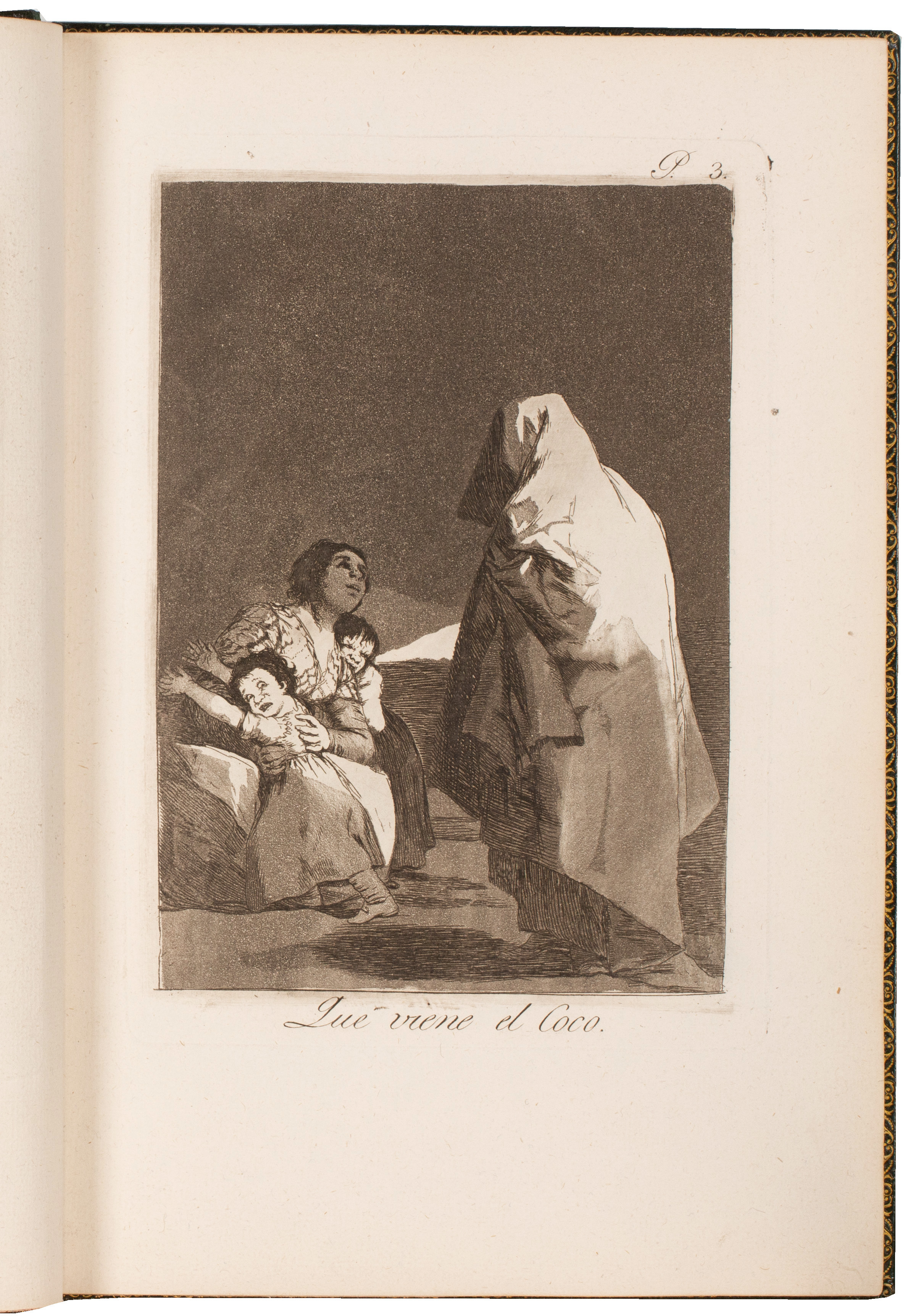
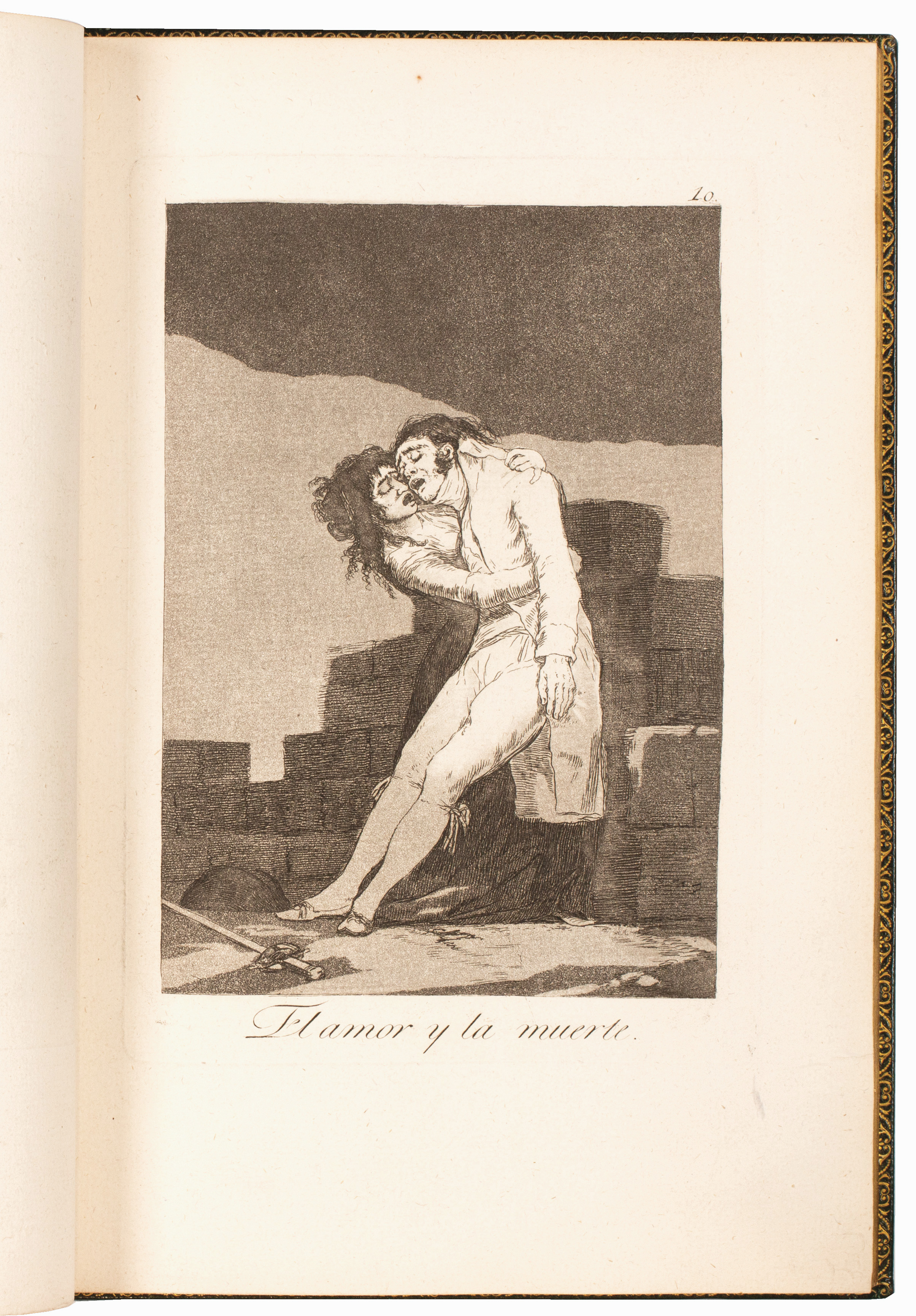
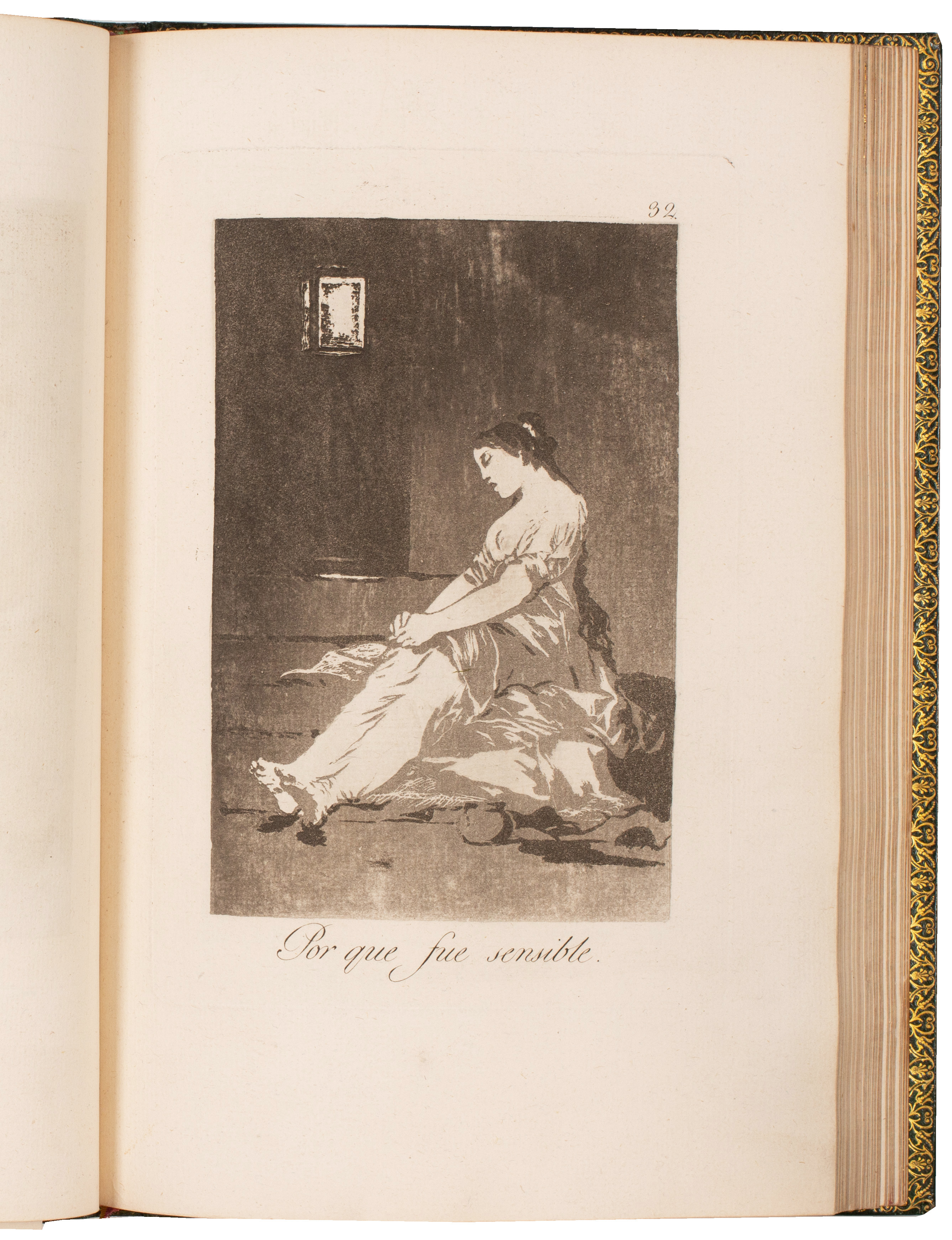
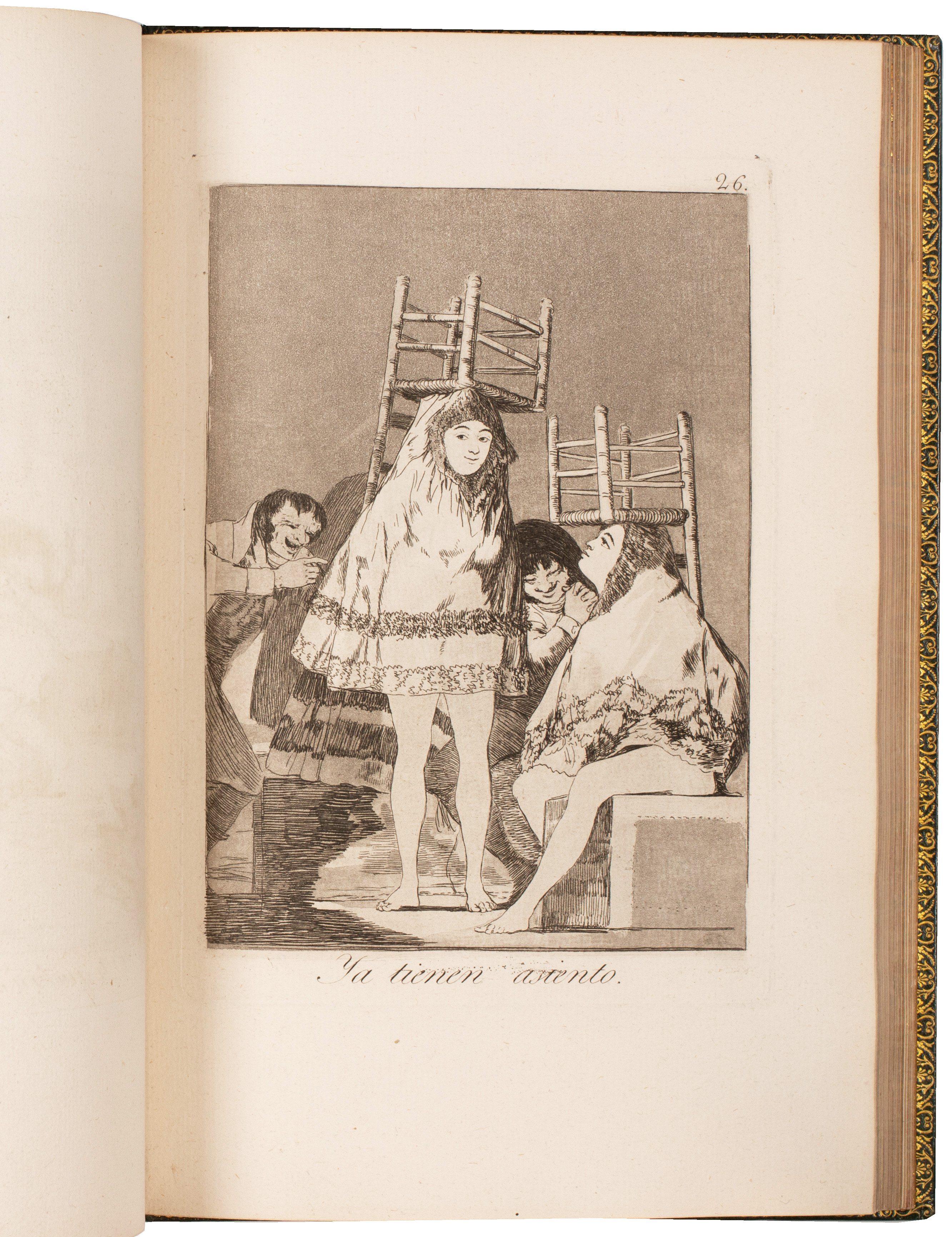
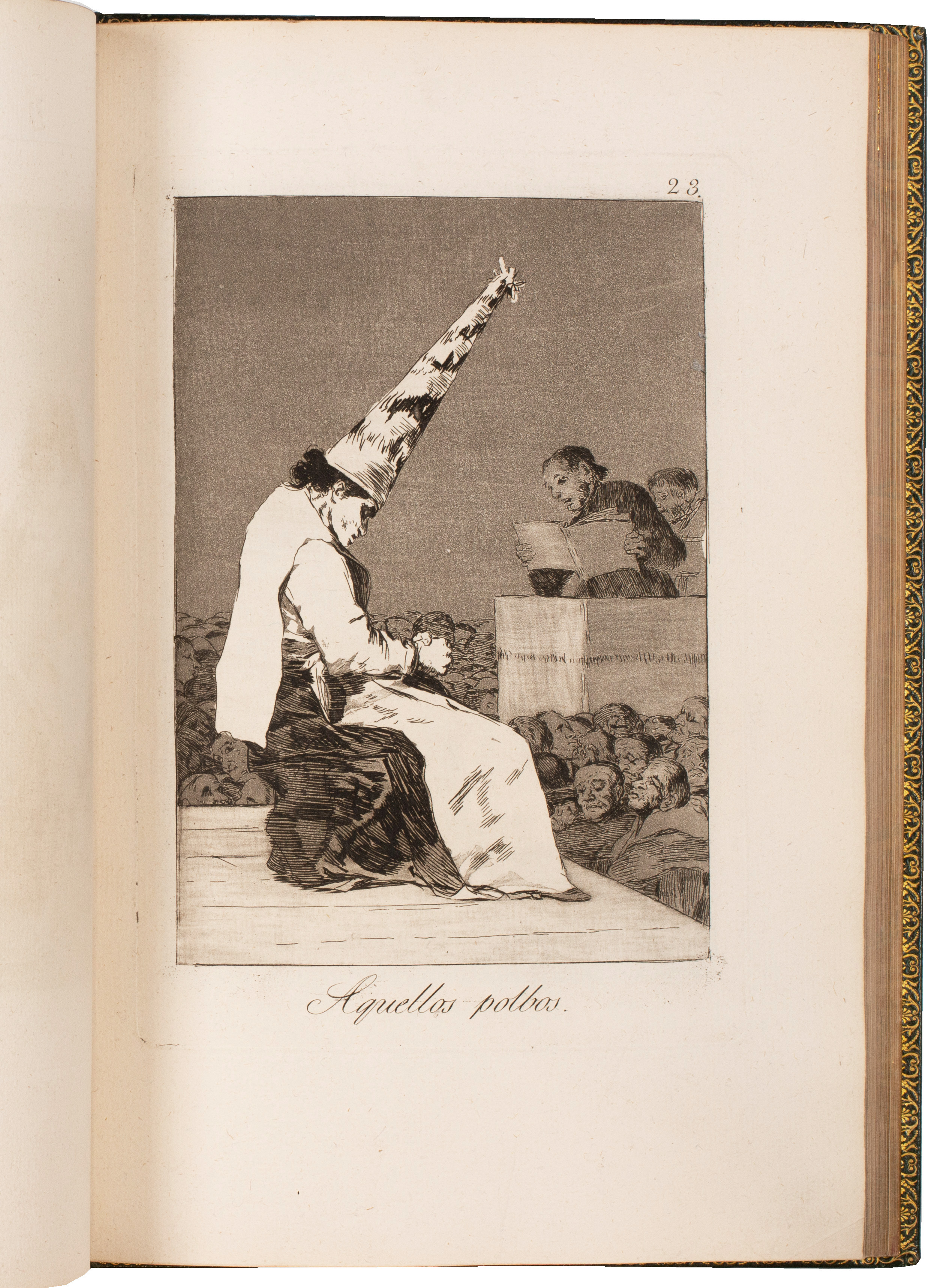
A fine set of the first edition of Goya's greatest set of prints, Los Caprichos, printed in warm sepia ink on thick laid paper.
From the first edition limited to approximately 300 copies (see Harris); this copy is printed after the scratch on plate 45 ('Mucho hay que chupar?') which occurred early in the printing but this is nevertheless a beautiful set with very crisp impressions of the plates, the paper retaining its original tone and the aquatint remaining strong.
'This edition is easily identified by the brilliance of the impressions and by the paper and ink used.' (Harris).
Published by Goya himself in 1799 and produced after Goya's return from his lover the Duchess of Alba's estate at Sanlúcar in 1798, Los Caprichos have long exerted a fascination greater than that of his other printed work. Of an evident satirical intent, the meaning and intended targets of Los Caprichos have long been discussed, though with no reliable conclusions having been made. The Church, particularly the Inquisition whom Goya later claimed had investigated Los Caprichos, the Government, the Queen Maria Luisa, her advisors and even the Duchess of Alba have been identified as the objects of Goya's satire and, indeed, as characters in the plates themselves. It is known, however, that Goya omitted two plates from the eventual 80 that alluded more directly to contemporary figures (in this case the Queen and the Duchess of Alba) and it seems certain that he wished an intriguing element of uncertainty to surround his work.
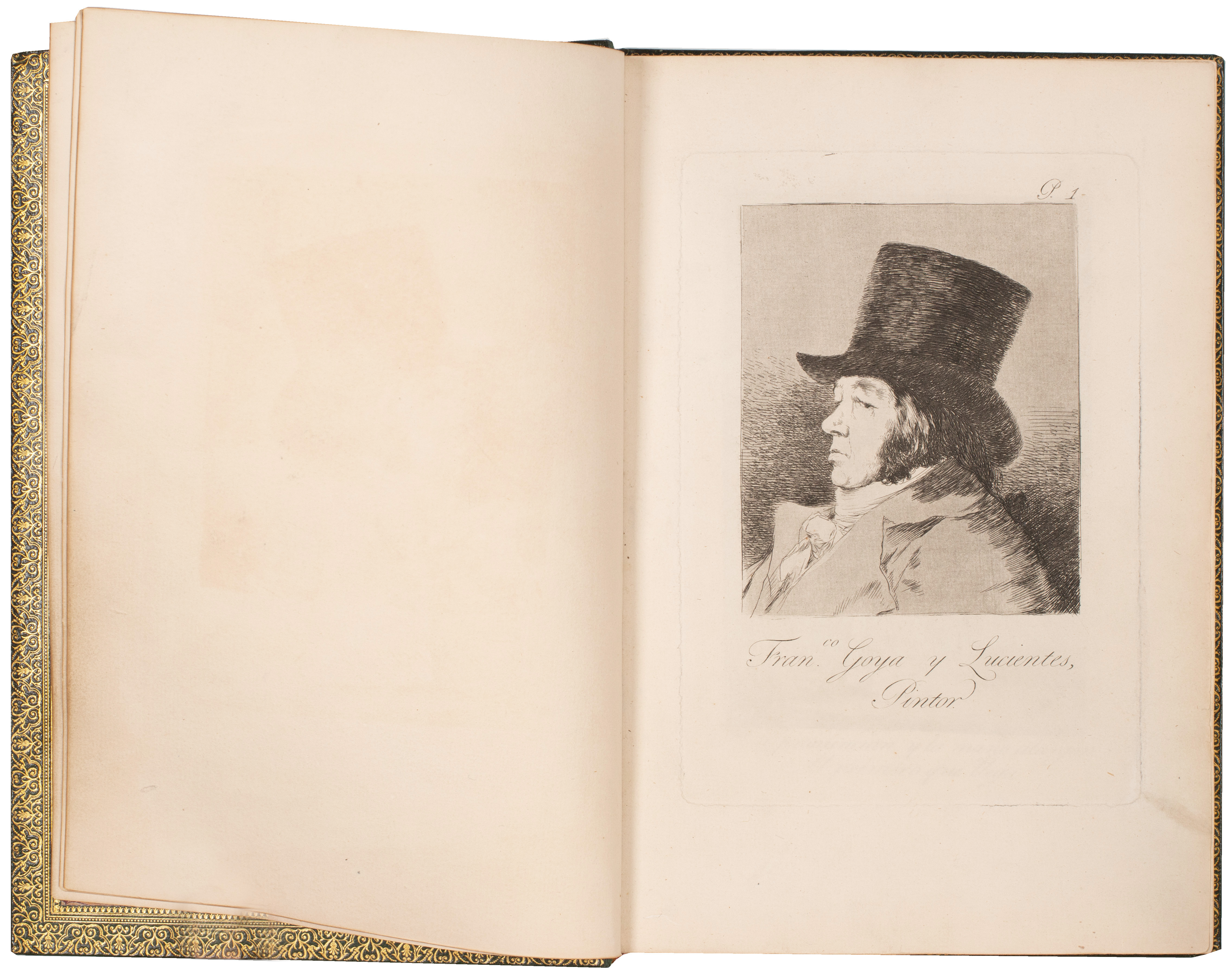
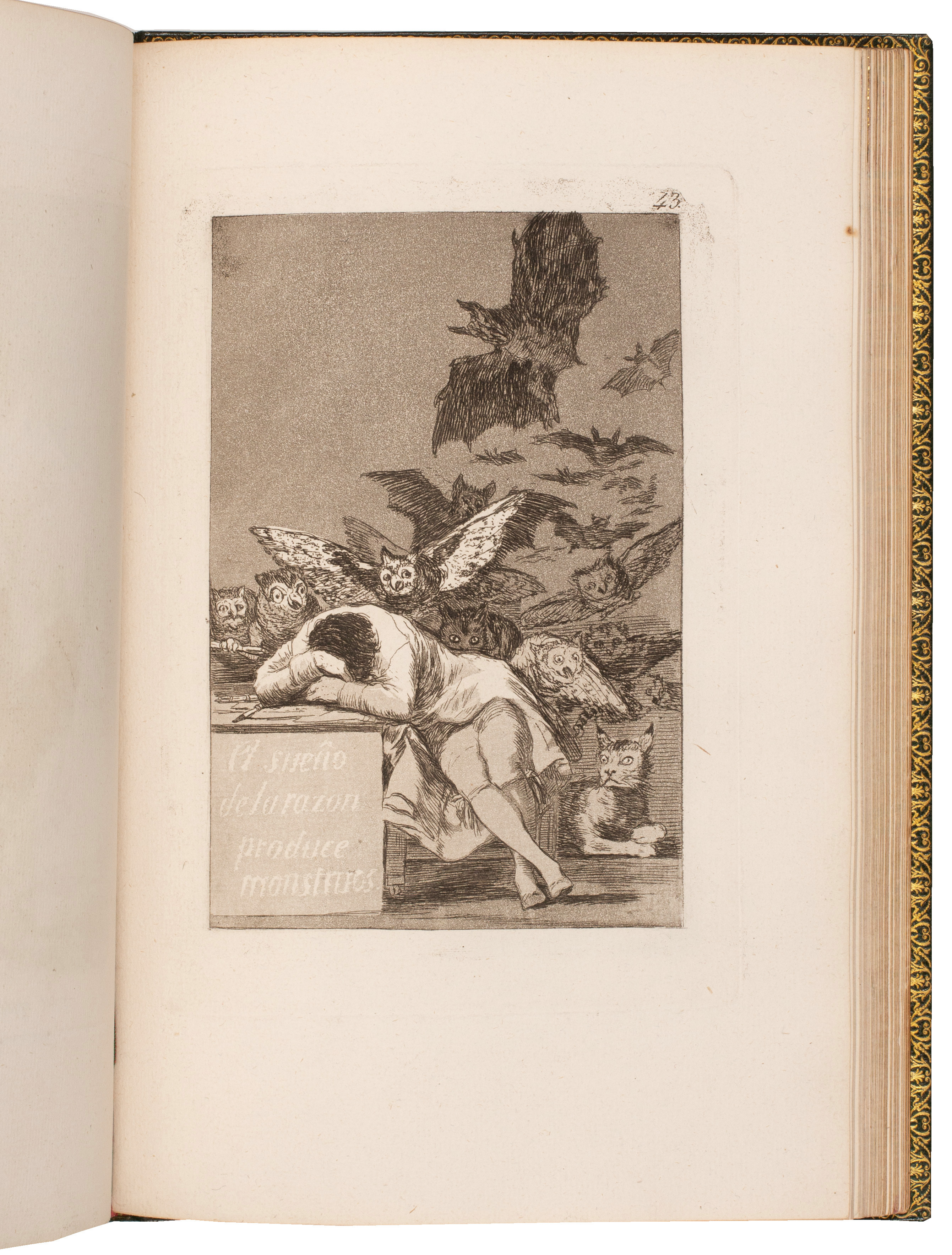
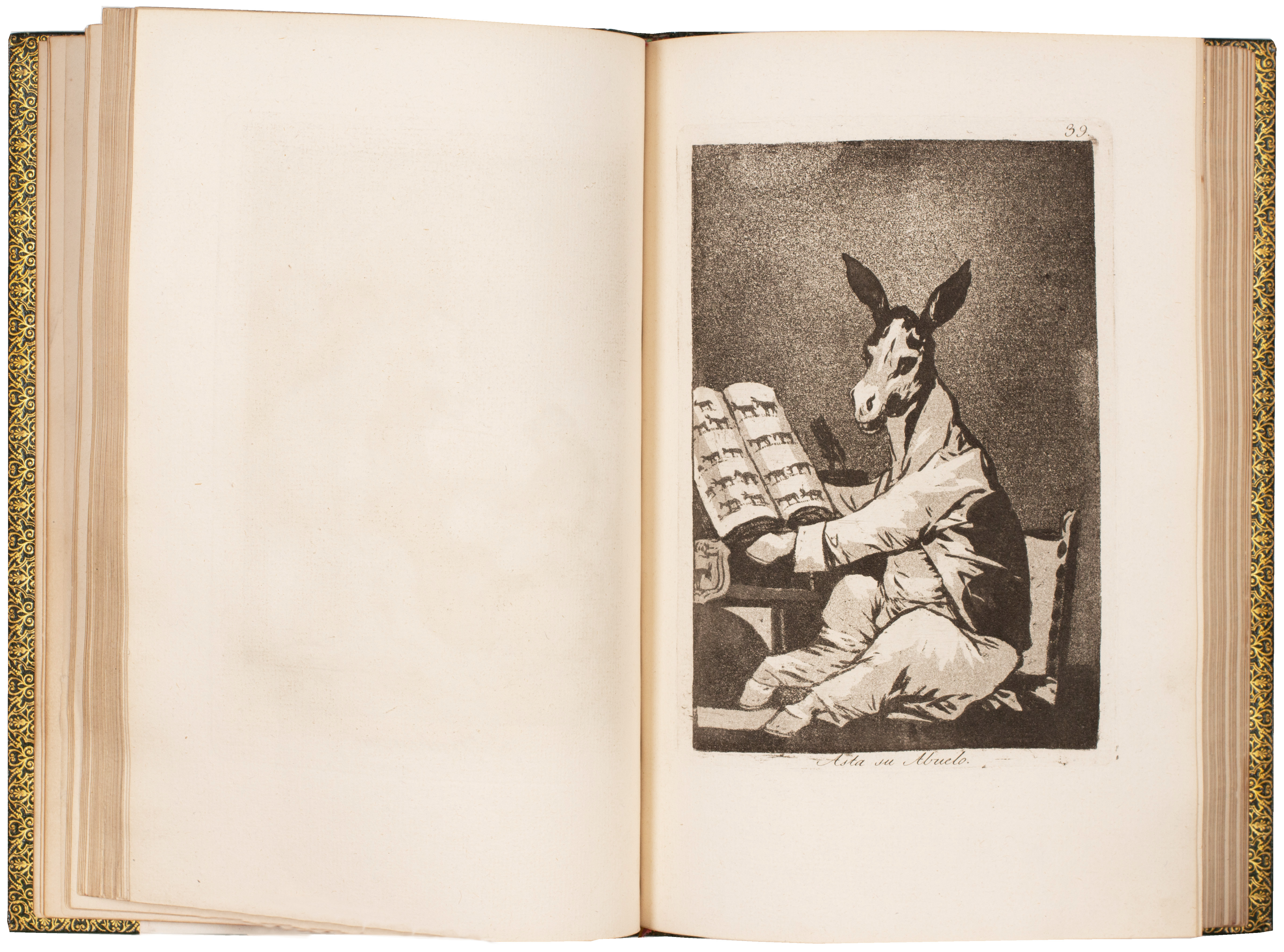
The plates themselves can be grouped according to subject: 'the coquetry or empty-headedness of women and the vanity of men; the evil counsels of old women; grotesque marriages; the mutual fleecing and duping of men and women; the series of donkeys; and finally the scenes of fantasy and witchcraft' (Harris pg. 99), but these are merely themes within the series (apart from the 'series of donkeys', plates 37 - 42) and do not appear to reflect an order of composition. However, Los Caprichos can be seen as a work of two halves: 'the first being a satire on human folly and wickedness with particular reference to the customs and manners of his [Goya's] time, and the second, 'Sueño' series of fantasy and witchcraft' (Harris pg. 102). In this grouping, plate 43, with its motto 'El sueño de la razon produce monstruos' ('the dream of reason produces monsters'), serves as a natural introduction or frontispiece to the later 'sueño' section. Harris makes the conjecture that Goya made the first plate (the self-portrait) after the decision had been made to combine these two series to serve as the frontispiece to the whole.
Sets of Los Caprichos were offered for sale in early 1799 and the first recorded sale (for four sets) was to the Duke and Duchess of Osuna in January of that year. Sales were slow and Goya himself stated that he sold only 27 sets of the plates (each for an ounce of gold) before he sold the remainder of the edition (240 sets) and the copperplates themselves to Charles IV for his Calcografía in exchange for an annuity for Goya's son Javier.
Los Caprichos was reprinted from the plates a further 11 times, with the final edition being issued by the Calcografía in 1937, a fact which bears testament to the lasting importance and appeal of Goya's engravings in general and this, his most characteristic work, in particular.
Also included, loosely inserted, is the 'bordereau d'adjudication' from M. Etienne Ader, dated '16.4.1956' indicating that this set of Los Caprichos was sold for 496,920 Francs (prior to the introduction of the new Franc in 1960, £1 = approx. 1,382 Francs), a considerable amount by any standard.
[Harris 1, 36 - 115; Brunet II, 1685].
From the first edition limited to approximately 300 copies (see Harris); this copy is printed after the scratch on plate 45 ('Mucho hay que chupar?') which occurred early in the printing but this is nevertheless a beautiful set with very crisp impressions of the plates, the paper retaining its original tone and the aquatint remaining strong.
'This edition is easily identified by the brilliance of the impressions and by the paper and ink used.' (Harris).
Published by Goya himself in 1799 and produced after Goya's return from his lover the Duchess of Alba's estate at Sanlúcar in 1798, Los Caprichos have long exerted a fascination greater than that of his other printed work. Of an evident satirical intent, the meaning and intended targets of Los Caprichos have long been discussed, though with no reliable conclusions having been made. The Church, particularly the Inquisition whom Goya later claimed had investigated Los Caprichos, the Government, the Queen Maria Luisa, her advisors and even the Duchess of Alba have been identified as the objects of Goya's satire and, indeed, as characters in the plates themselves. It is known, however, that Goya omitted two plates from the eventual 80 that alluded more directly to contemporary figures (in this case the Queen and the Duchess of Alba) and it seems certain that he wished an intriguing element of uncertainty to surround his work.
The plates themselves can be grouped according to subject: 'the coquetry or empty-headedness of women and the vanity of men; the evil counsels of old women; grotesque marriages; the mutual fleecing and duping of men and women; the series of donkeys; and finally the scenes of fantasy and witchcraft' (Harris pg. 99), but these are merely themes within the series (apart from the 'series of donkeys', plates 37 - 42) and do not appear to reflect an order of composition. However, Los Caprichos can be seen as a work of two halves: 'the first being a satire on human folly and wickedness with particular reference to the customs and manners of his [Goya's] time, and the second, 'Sueño' series of fantasy and witchcraft' (Harris pg. 102). In this grouping, plate 43, with its motto 'El sueño de la razon produce monstruos' ('the dream of reason produces monsters'), serves as a natural introduction or frontispiece to the later 'sueño' section. Harris makes the conjecture that Goya made the first plate (the self-portrait) after the decision had been made to combine these two series to serve as the frontispiece to the whole.
Sets of Los Caprichos were offered for sale in early 1799 and the first recorded sale (for four sets) was to the Duke and Duchess of Osuna in January of that year. Sales were slow and Goya himself stated that he sold only 27 sets of the plates (each for an ounce of gold) before he sold the remainder of the edition (240 sets) and the copperplates themselves to Charles IV for his Calcografía in exchange for an annuity for Goya's son Javier.
Los Caprichos was reprinted from the plates a further 11 times, with the final edition being issued by the Calcografía in 1937, a fact which bears testament to the lasting importance and appeal of Goya's engravings in general and this, his most characteristic work, in particular.
Also included, loosely inserted, is the 'bordereau d'adjudication' from M. Etienne Ader, dated '16.4.1956' indicating that this set of Los Caprichos was sold for 496,920 Francs (prior to the introduction of the new Franc in 1960, £1 = approx. 1,382 Francs), a considerable amount by any standard.
[Harris 1, 36 - 115; Brunet II, 1685].
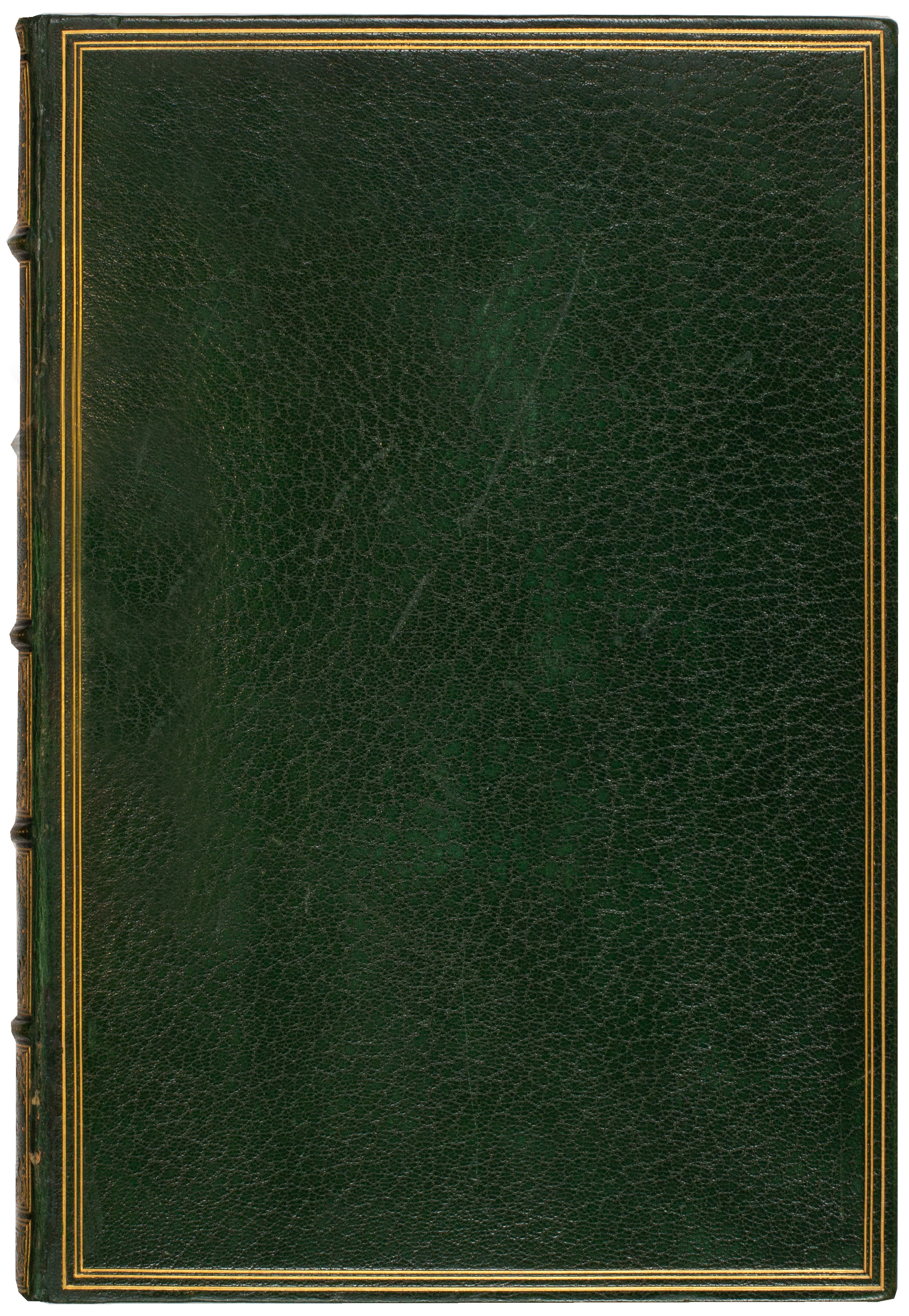
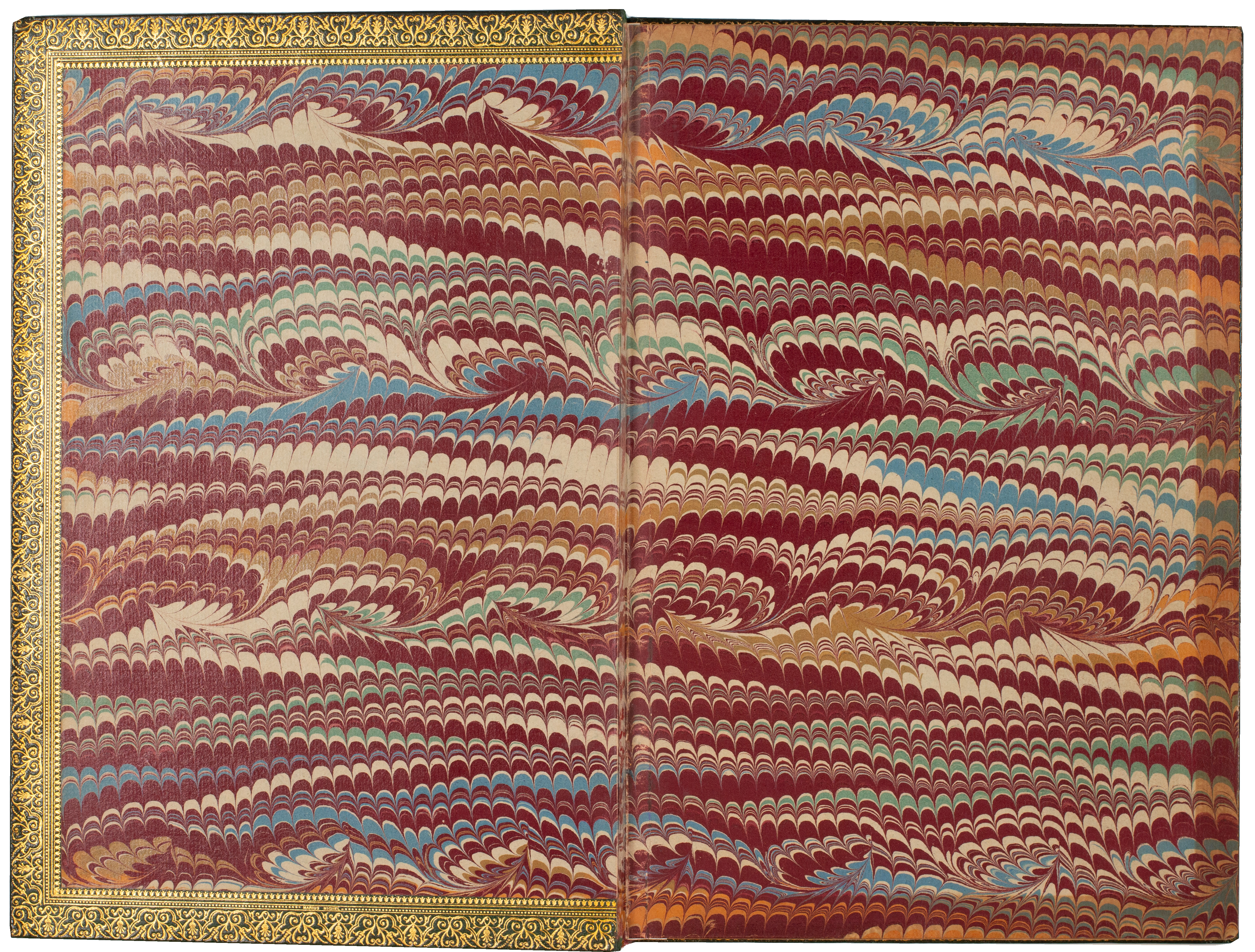
4to. (308 x 215 mm). Eighty etched plates with aquatint by Francisco Goya (sheet size: 300 x 200 mm) numbered 1 - 80 on laid paper. Full green crushed morocco by Marius Michel with his signature gilt, boards ruled in gilt, banded spine with title gilt and foliate and floral decorative tooling in six compartments, turn-ins with elaborate gilt floral motif, marbled endpapers, a.e.g., later green morocco-backed wool-lined solander box.
#48747