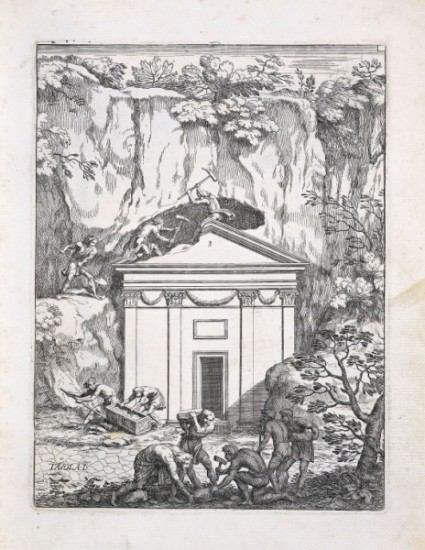
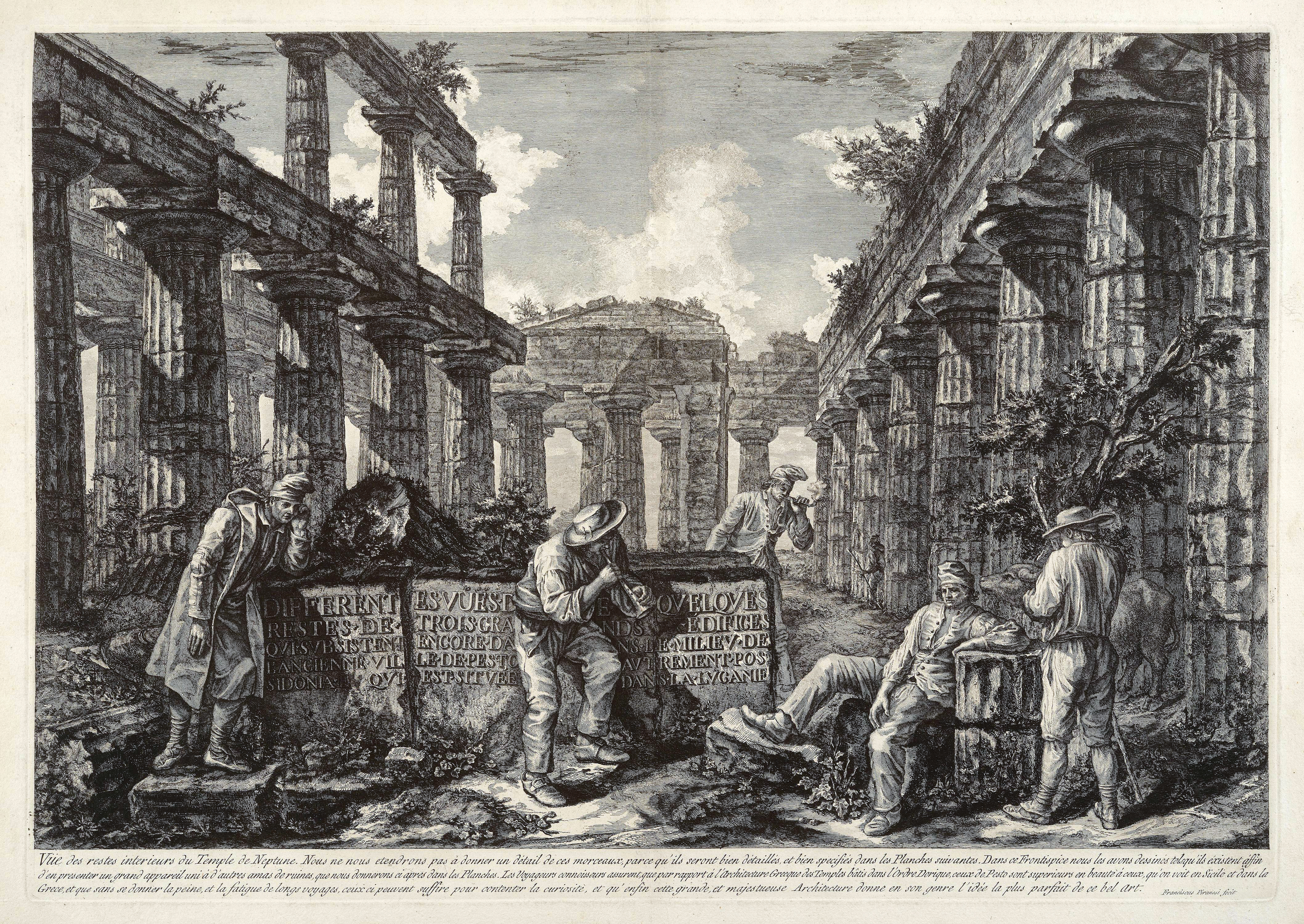
Differentes vues de quelques Restes de trois grands Edifices qui subsistent encore dans le milieu de l'ancienne Ville de Pesto autremont Posidonia qui est située dans la Lucanie
Piranesi, Giovanni Battista
Rome. 1778
The first edition, printed and published in Rome, of Piranesi's final - and very scarce - work on Paestum, in-plano and in an extraordinary contemporary Italian binding.
The three 5th-century temples at Paestum were certainly known to Piranesi, but he made the journey to see them late in 1777 or early 1778, only months before his death. The resulting engraved title and twenty plates received the imprimatur two months before he did, in fact, die. Of these twenty-one engravings, eighteen are signed by Piranesi himself, while the remainder appear to have been completed by Francesco and bear his signature. However, a close viewing of all the engravings show indications that the architecture and probably the vegetation were drawn by Piranesi, with Francesco contributing the figures, attempting to recreate his father's style. Wilton-Ely argues that Piranesi completed eighteen of the engravings and was the major contributor to the remaining three (the title and plates XIX and XX), but it required Francesco to finish them.
'Piranesi's final work is one of his most commanding statements on architecture and, ironically, was to have a profound effect on the appreciation of the monumental austerity of Greek architcture as Neo-Classicism developed.' (Wilton-Ely pg. 777).
The additional plates included at the end of the volume, all Vedute by Piranesi from 1776, are the following:
- 'Interno del Tempio do di Canopo nella Villa Adriana' (Hind 131: Hadrian's Villa: The Canopus Interior);
- 'Veduta di un Eliocamino per abitarvi l'Inverno, il quale era riscaldato dal Sole che s'introduceva per il Finestre' (Hind 133: Hadrian's Villa: The So-Called Heliocaminus);
- 'Veduta del Palazzo Stopani' (Hind 128: The Palazzo Vidoni (Formerly the Palazzo Stopani);
- 'Veduta dell' Anfiteatro Flavio detto il Colisseo' (Hind 126: The Colosseum. Bird's-Eye View);
- 'Veduta degli' Avanzi della Circonferenza delle antiche Fabbriche di una delle Piazza della Ville Adriana oggidi chiamata Piazza d'oro' (Hind 132: Hadrian's Villa: The Piazza d'Oro);
- 'Avanzi di in antico Seolcro oggi detto la Concchia che si vede poco lungi dalla Porta di Capua per andar a Napoli' (Hind 130: The Tomb Called La Concchia, on the Via Appia near Capua);
- 'Veduta interna della Chiesa della Madonna degli Angioli detta della Certosa che anticame er la principal Sala delle Terme di Diocleziano' (Hind 129: S. Maria degli Angeli. Interior. Formerly the Central Hall of the Baths of Diocletian).
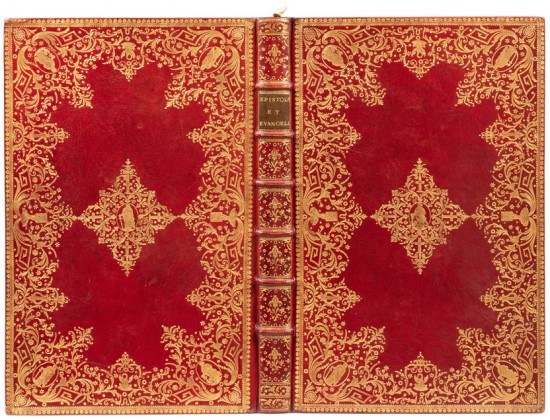
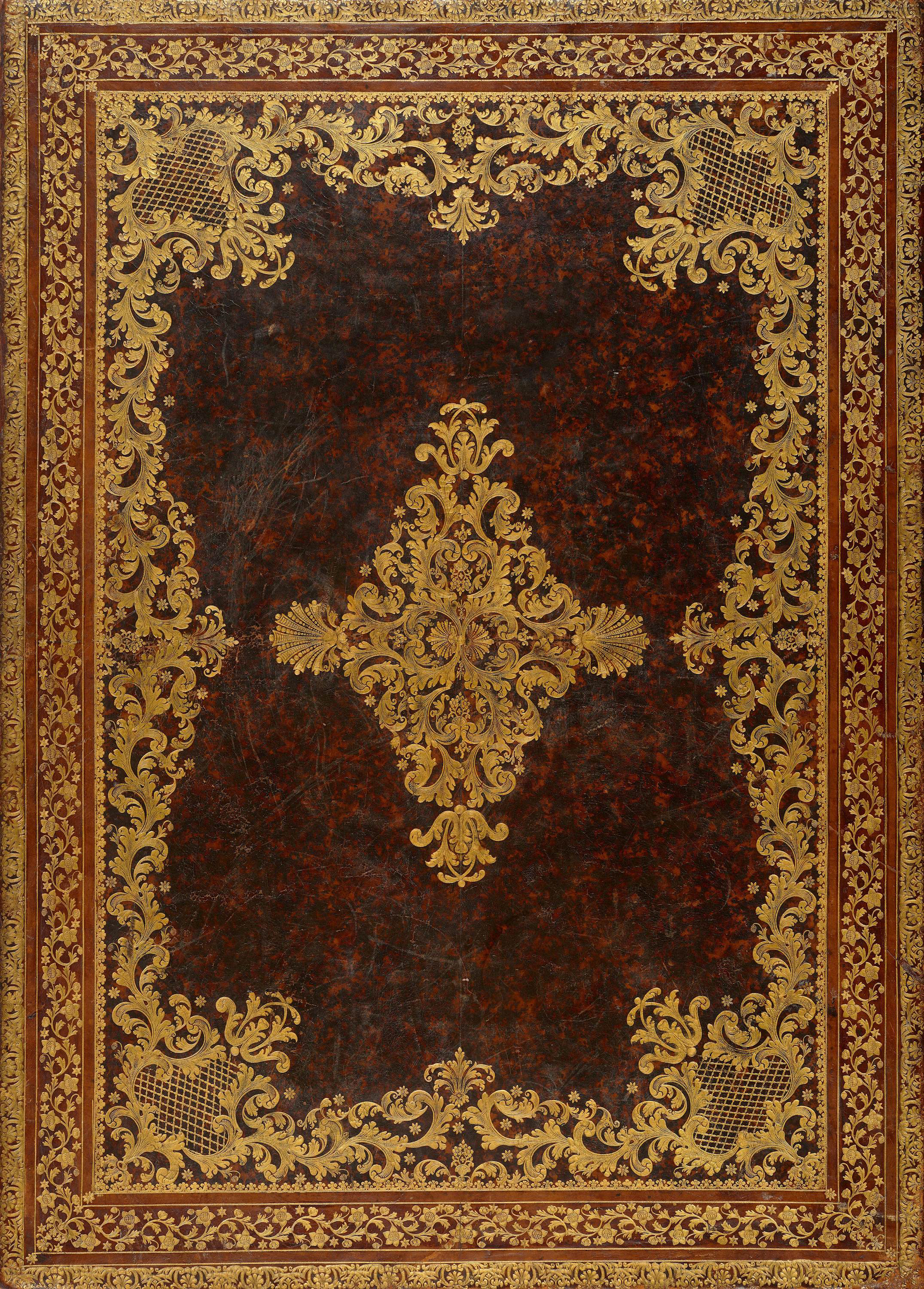
The remarkable binding of the present volume, clearly Italian, bears strong similarities to others created in the Salvioni workshop in Rome. A very similar binding, also for a work of Piranesi's, is known, which bears the stamp of the library of Tsarskoye Selo and was likely acquired by Paul Romanov and his wife Sophia Dorothea of Württemberg on their Grand Tour in 1781 - 1782 when they travelled as the Comte and Comtesse du Nord. That volume formed a part of the monumental set of 32 volumes, detailed as 'Oeuvres Complètes' of 'Piranesi, Giov. Batt. et Franceso' listed by Gilhofer and Ranschburg in their 1932 sale catalogue. Slight differences in the bindings as well as the absence of indications of a matching provenance suggest that even if these two volumes of works by Piranesi do not have the same subsequent provenance it seems undeniable that they share a common origin.
This notable composite volume is in remarkable condition with the plates in a superb state of preservation. The only notable faults are as follows: lower outer corner of the first Paestum plate has been slightly damaged and repaired while plate V is a few millimetres shorter than its fellows (the same is true of one or two of the additional Vedute plates); the majority too of the Paestum plates appear to be reinforced verso at the drying crease. The binding too with discreet repairs to board edges and spine. These faults aside, this represents a rare example of the Roman issue of the Paestum series presented in a contemporary Italian binding printed on a thick Italian laid paper with the readily identifiable fleur-de-lys within a double circle watermark.
'Generally in very thick laid paper ... The custom of framing marks within a circle appears to have been chiefly if not exclusively Italian, so that all three fleur-de-lys quoted (nos. 1 - 3) almost certainly indicate Italian papers.' (see Hind, pg. 34, 'Watermarks').
[Wilton-Ely 717 - 737; Focillon 583 - 599; see lot 359 in Gilhofer and Ranschburg's catalogue 'Kostbare Bücher und Manuskripte aus den Bibliotheken der RUssischen Zaren in Zarskoje-Selo ... &c.', Lucerne, 1932].
The three 5th-century temples at Paestum were certainly known to Piranesi, but he made the journey to see them late in 1777 or early 1778, only months before his death. The resulting engraved title and twenty plates received the imprimatur two months before he did, in fact, die. Of these twenty-one engravings, eighteen are signed by Piranesi himself, while the remainder appear to have been completed by Francesco and bear his signature. However, a close viewing of all the engravings show indications that the architecture and probably the vegetation were drawn by Piranesi, with Francesco contributing the figures, attempting to recreate his father's style. Wilton-Ely argues that Piranesi completed eighteen of the engravings and was the major contributor to the remaining three (the title and plates XIX and XX), but it required Francesco to finish them.
'Piranesi's final work is one of his most commanding statements on architecture and, ironically, was to have a profound effect on the appreciation of the monumental austerity of Greek architcture as Neo-Classicism developed.' (Wilton-Ely pg. 777).
The additional plates included at the end of the volume, all Vedute by Piranesi from 1776, are the following:
- 'Interno del Tempio do di Canopo nella Villa Adriana' (Hind 131: Hadrian's Villa: The Canopus Interior);
- 'Veduta di un Eliocamino per abitarvi l'Inverno, il quale era riscaldato dal Sole che s'introduceva per il Finestre' (Hind 133: Hadrian's Villa: The So-Called Heliocaminus);
- 'Veduta del Palazzo Stopani' (Hind 128: The Palazzo Vidoni (Formerly the Palazzo Stopani);
- 'Veduta dell' Anfiteatro Flavio detto il Colisseo' (Hind 126: The Colosseum. Bird's-Eye View);
- 'Veduta degli' Avanzi della Circonferenza delle antiche Fabbriche di una delle Piazza della Ville Adriana oggidi chiamata Piazza d'oro' (Hind 132: Hadrian's Villa: The Piazza d'Oro);
- 'Avanzi di in antico Seolcro oggi detto la Concchia che si vede poco lungi dalla Porta di Capua per andar a Napoli' (Hind 130: The Tomb Called La Concchia, on the Via Appia near Capua);
- 'Veduta interna della Chiesa della Madonna degli Angioli detta della Certosa che anticame er la principal Sala delle Terme di Diocleziano' (Hind 129: S. Maria degli Angeli. Interior. Formerly the Central Hall of the Baths of Diocletian).
The remarkable binding of the present volume, clearly Italian, bears strong similarities to others created in the Salvioni workshop in Rome. A very similar binding, also for a work of Piranesi's, is known, which bears the stamp of the library of Tsarskoye Selo and was likely acquired by Paul Romanov and his wife Sophia Dorothea of Württemberg on their Grand Tour in 1781 - 1782 when they travelled as the Comte and Comtesse du Nord. That volume formed a part of the monumental set of 32 volumes, detailed as 'Oeuvres Complètes' of 'Piranesi, Giov. Batt. et Franceso' listed by Gilhofer and Ranschburg in their 1932 sale catalogue. Slight differences in the bindings as well as the absence of indications of a matching provenance suggest that even if these two volumes of works by Piranesi do not have the same subsequent provenance it seems undeniable that they share a common origin.
This notable composite volume is in remarkable condition with the plates in a superb state of preservation. The only notable faults are as follows: lower outer corner of the first Paestum plate has been slightly damaged and repaired while plate V is a few millimetres shorter than its fellows (the same is true of one or two of the additional Vedute plates); the majority too of the Paestum plates appear to be reinforced verso at the drying crease. The binding too with discreet repairs to board edges and spine. These faults aside, this represents a rare example of the Roman issue of the Paestum series presented in a contemporary Italian binding printed on a thick Italian laid paper with the readily identifiable fleur-de-lys within a double circle watermark.
'Generally in very thick laid paper ... The custom of framing marks within a circle appears to have been chiefly if not exclusively Italian, so that all three fleur-de-lys quoted (nos. 1 - 3) almost certainly indicate Italian papers.' (see Hind, pg. 34, 'Watermarks').
[Wilton-Ely 717 - 737; Focillon 583 - 599; see lot 359 in Gilhofer and Ranschburg's catalogue 'Kostbare Bücher und Manuskripte aus den Bibliotheken der RUssischen Zaren in Zarskoje-Selo ... &c.', Lucerne, 1932].
[28 leaves]. Large folio. (766 x 556 mm). Engraved title and 20 engraved plates numbered I - XX in Roman numerals by Piranesi (see below); also included, bound in at the conclusion of the volume, are seven plates taken from Piranesi's 'Vedute' (see also below). Visible watermarks in the series appear to conform to Robison 36 (i.e. a fleur-de-lys within a double circle); sheet size: 540 x 732 mm. Contemporary Italian marbled calf, boards with a highly elaborate Rococo décor, a large and elaborate central vignette surrounded by four decorative borders of different tools and styles featuring various floral, foliate and astral tools, acorns, thistles and coronets, banded spine with elaborate decorative tooling and morocoo label with gilt title (PIRA- / NESI / PAE- / STUM) in eight compartments, elaborate patterned printed paper pastedowns, a.e.g.
#48778