Die Silbergäule. MERZ 8. Die Kathedrale
Schwitters, Kurt
Hanover. Paul Steegemann Verlag. 1920
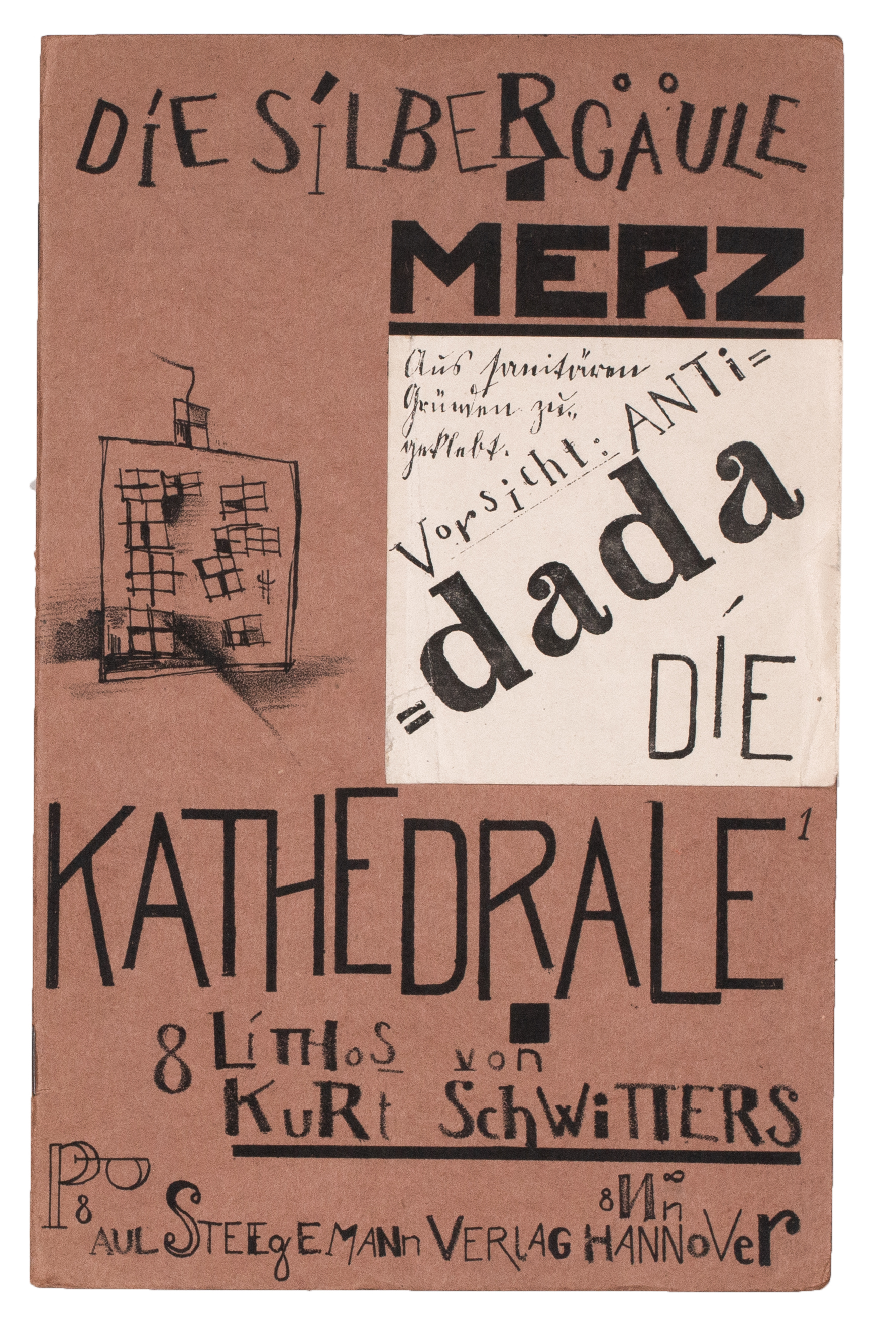
An excellent unsophisticated copy complete with the white printed 'Vorsicht: ANTi-dada' wraparound paper label.
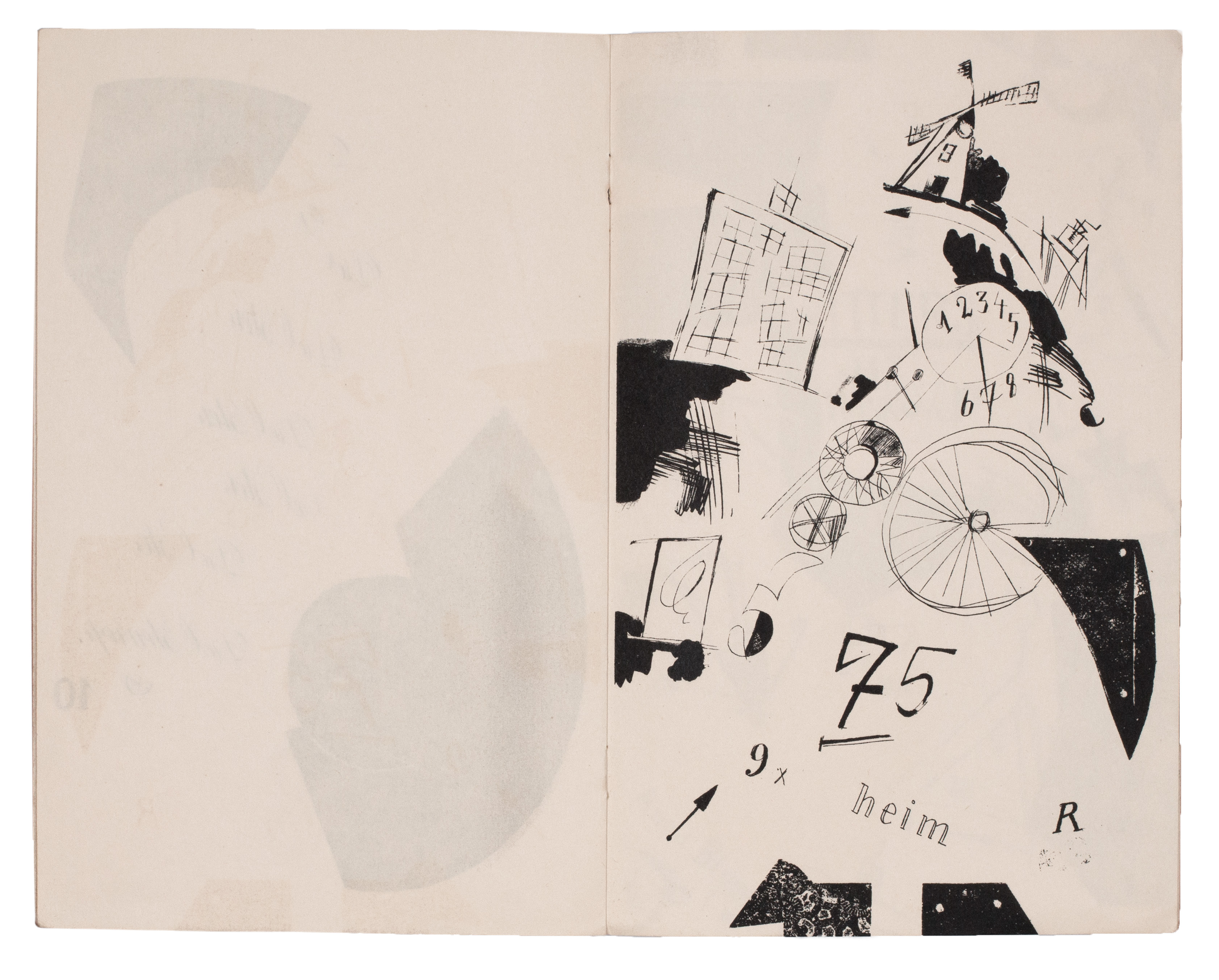
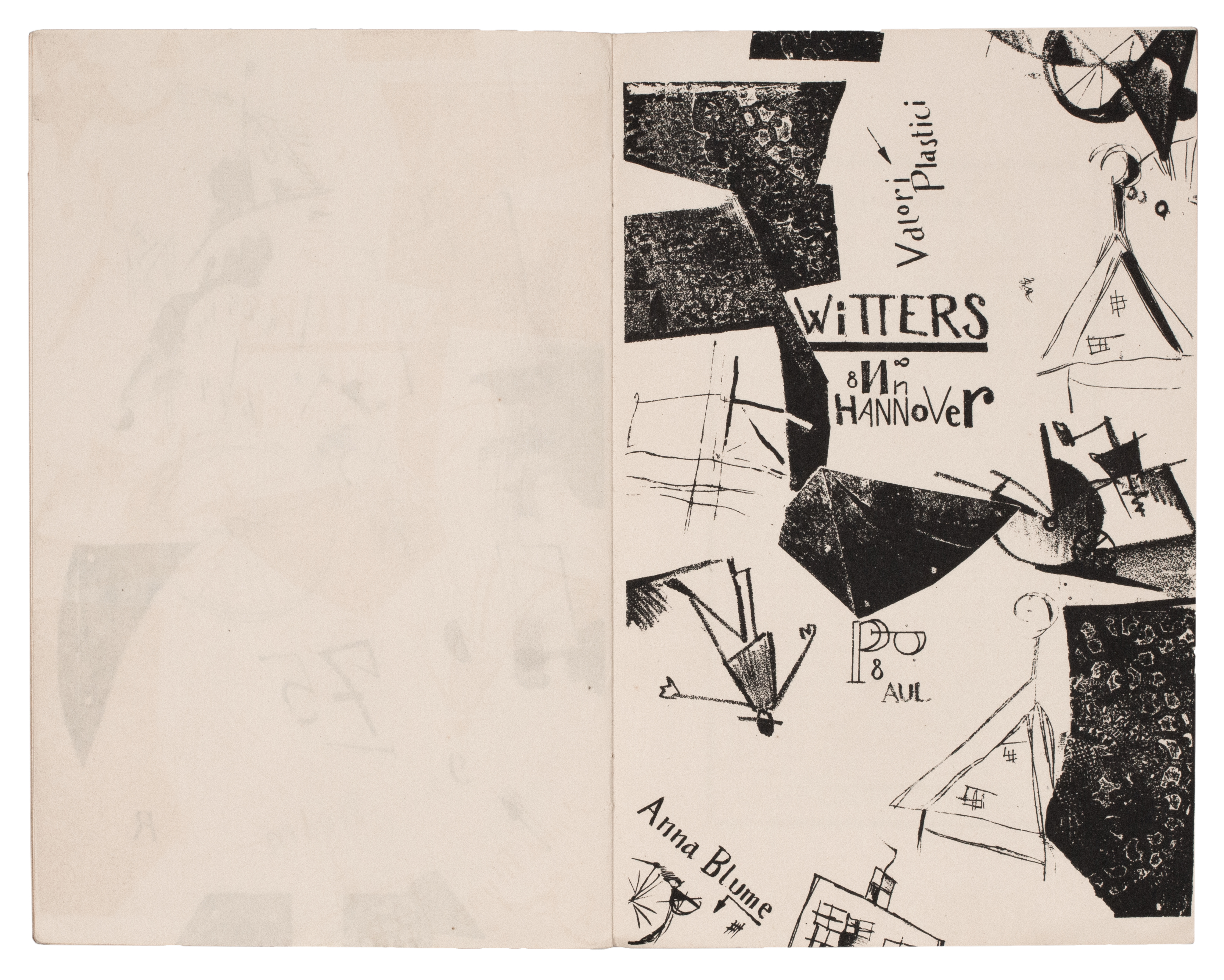
Not to be confused with 'Merz 8 / 9 Nature / Nasci' (1924), 'Die Kathedrale' is a graphic tour de force of Schwitters' dada invention reproducing in lithography many of the visual tropes of his collage and typographic work.
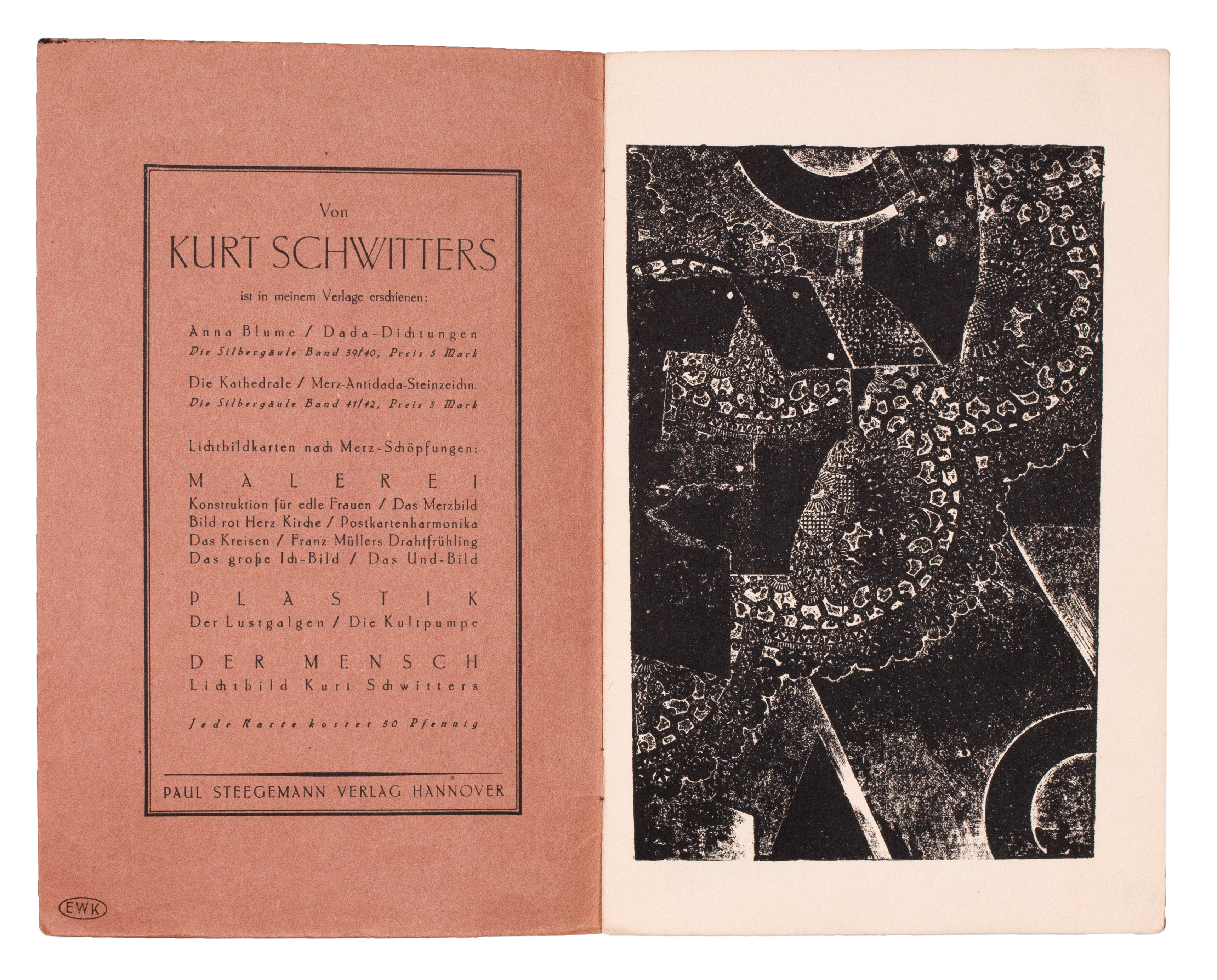
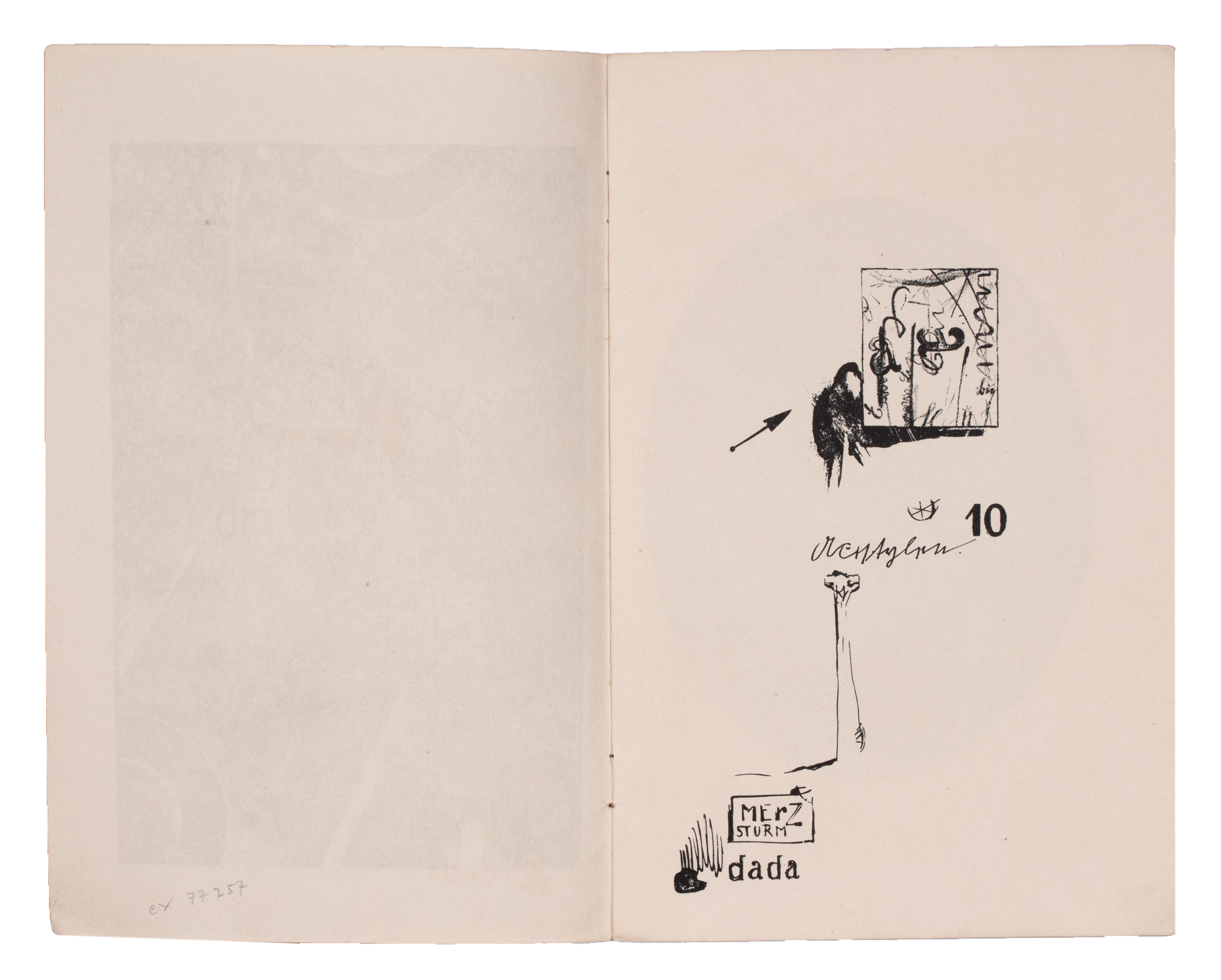
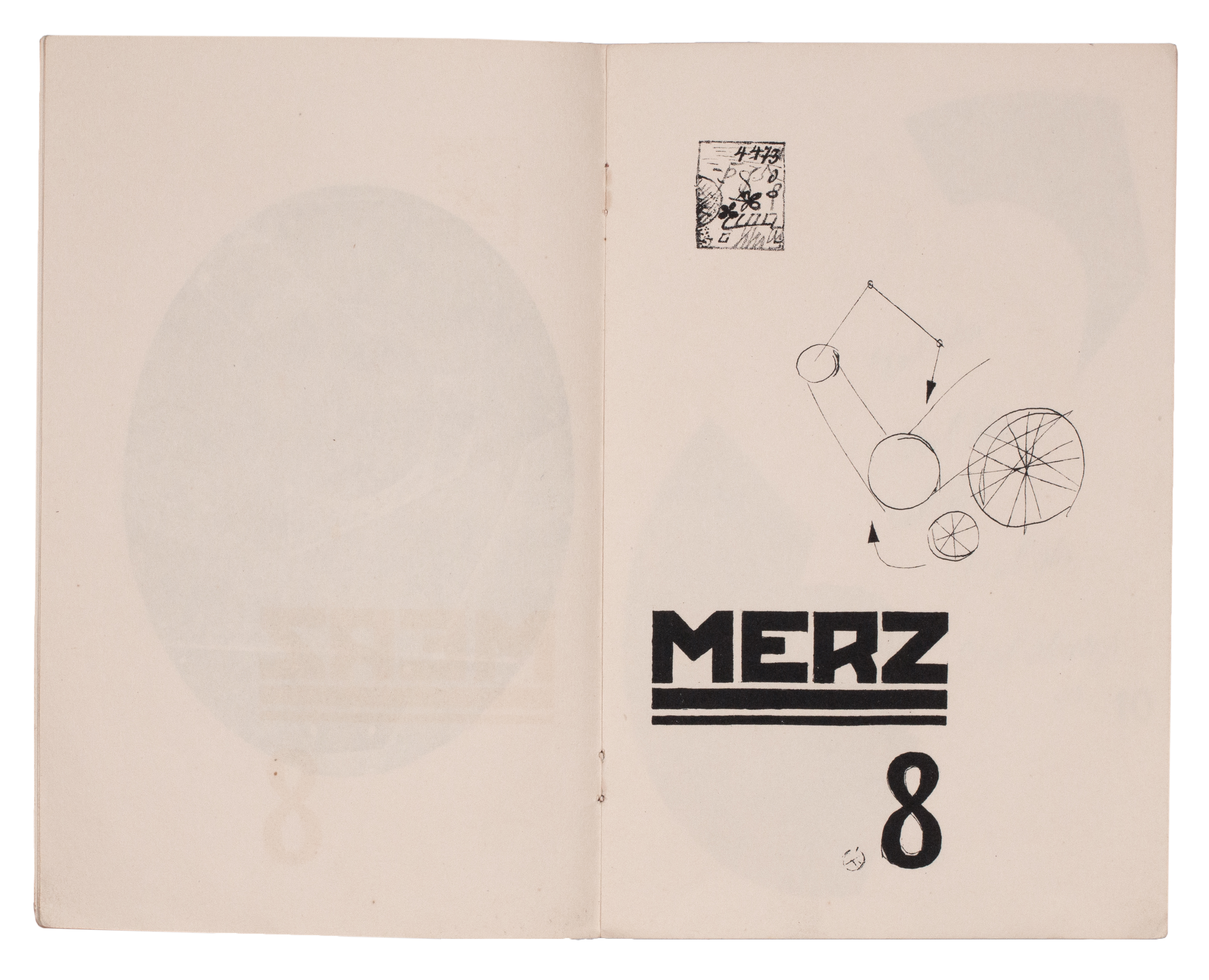
'The booklet 'Die Kathedrale' with 8 lithographs by Schwitters was published by Paul Steegemann's Silbergaule series in 1920. The prints differ greatly from one another. Some are drawn in free rhythms on a light ground and present once more the motif of pseudo-functional machinery or show Dadaistically [sic] combined elements familiar from the drawings (windmill, coffee mill, house, stroller, handwriting, numbers). Others are compact and flat-looking 'abstract' forms - rectangular or oval. Here too Schwitters made use of 'foreign matter' such as pieces of shoe leather and patterned material (presumably confectioners' paper such as he often used in his early collages, but pasted on the process block). The Kathedrale graphics are doubtless the finest, most original works produced by Schwitters at this time, and they deserve a place of honour in the history of modern graphics.' (Schmalenbach).
'When he published an album of lithographs in 1920, 'Die Kathedrale', he put a sticker on the front reading 'Vorsicht: ANTi-dada', and one of the lithographs inside places 'Merz' and 'Der Sturm' together inside a box with 'Dada' on the outside.' (Ades).
[Ades 6.7 & 6.33, see pg. 123].
Not to be confused with 'Merz 8 / 9 Nature / Nasci' (1924), 'Die Kathedrale' is a graphic tour de force of Schwitters' dada invention reproducing in lithography many of the visual tropes of his collage and typographic work.
'The booklet 'Die Kathedrale' with 8 lithographs by Schwitters was published by Paul Steegemann's Silbergaule series in 1920. The prints differ greatly from one another. Some are drawn in free rhythms on a light ground and present once more the motif of pseudo-functional machinery or show Dadaistically [sic] combined elements familiar from the drawings (windmill, coffee mill, house, stroller, handwriting, numbers). Others are compact and flat-looking 'abstract' forms - rectangular or oval. Here too Schwitters made use of 'foreign matter' such as pieces of shoe leather and patterned material (presumably confectioners' paper such as he often used in his early collages, but pasted on the process block). The Kathedrale graphics are doubtless the finest, most original works produced by Schwitters at this time, and they deserve a place of honour in the history of modern graphics.' (Schmalenbach).
'When he published an album of lithographs in 1920, 'Die Kathedrale', he put a sticker on the front reading 'Vorsicht: ANTi-dada', and one of the lithographs inside places 'Merz' and 'Der Sturm' together inside a box with 'Dada' on the outside.' (Ades).
[Ades 6.7 & 6.33, see pg. 123].
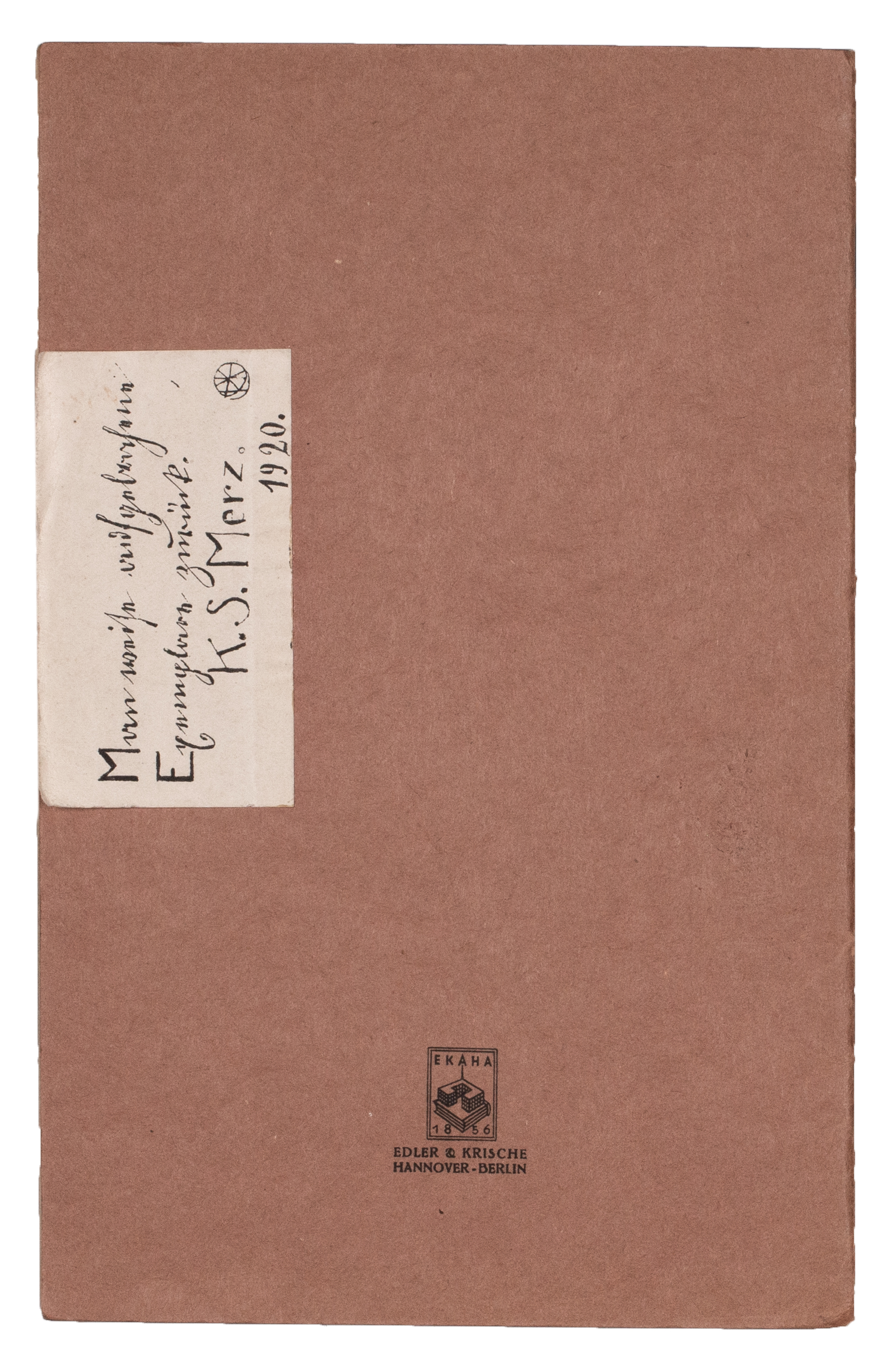
[8 unnumbered leaves]. 8vo. (224 x 144 mm). Cover with lithograph title by Schwitters and additional white pasted on label with printed lithograph text recto and 'Von Kurt Schwitters' with list of works verso, 7 leaves with Schwitter's original monochrome lithographs recto, leaf with list of works of 'Die Silbergäule' recto and 'Neue Graphik' verso, rear inner wrapper with list of 'Einmaligen Vorzusausgabe' (all published by Paul Steegemann), rear wrapper with printer's credit and additional half of pasted on paper label with printed lithograph text. Original publisher's brown printed wrappers stapled as issued, white paper lithograph fore-edge label to front and rear covers cut as usual, later white wool-lined green morocco-backed and -edged wood board protective box, gilt title to spine.
#49022