Vedute di Roma
Piranesi, Giovanni Battista
Rome. c.1745–c.1754
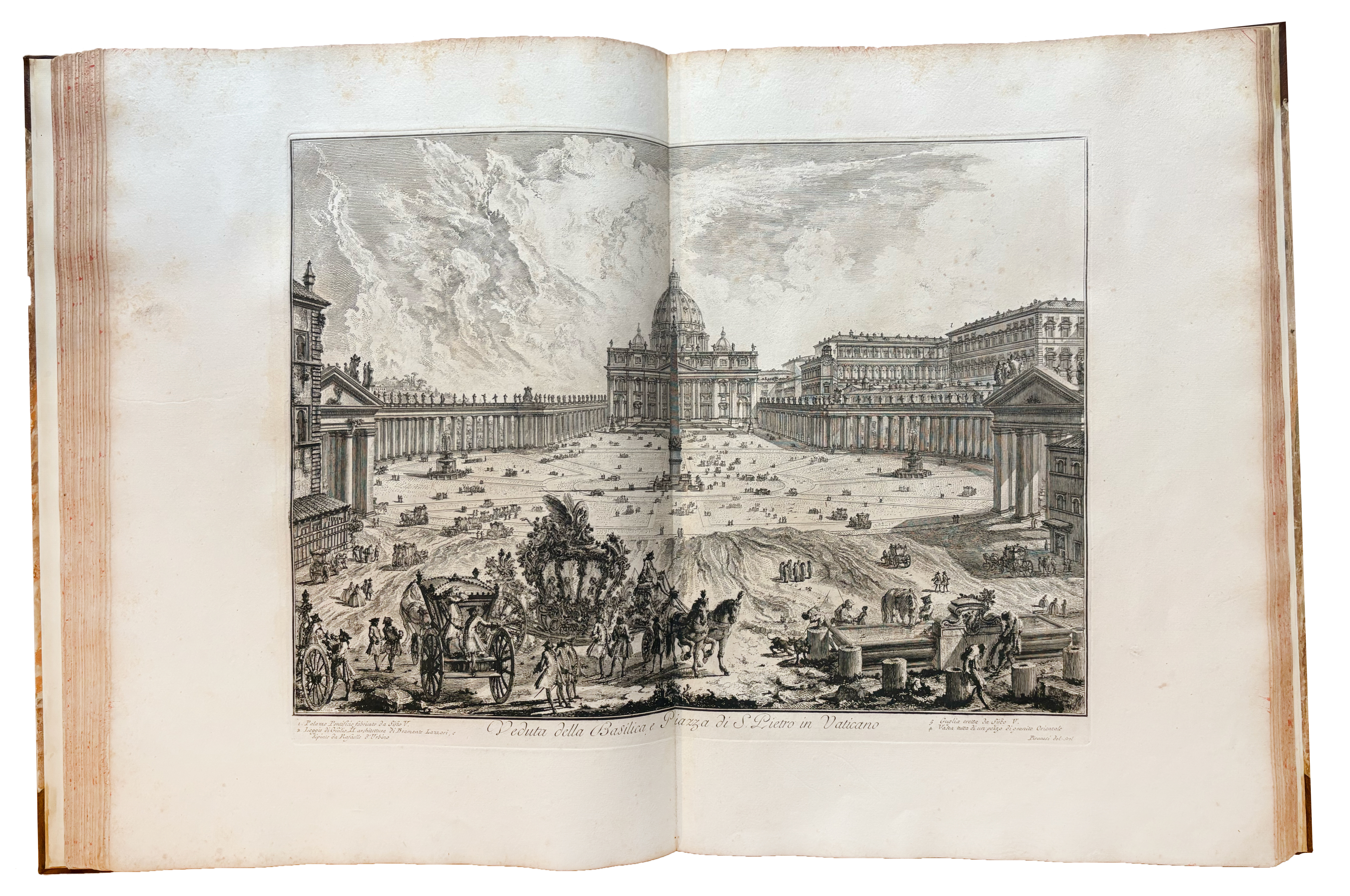
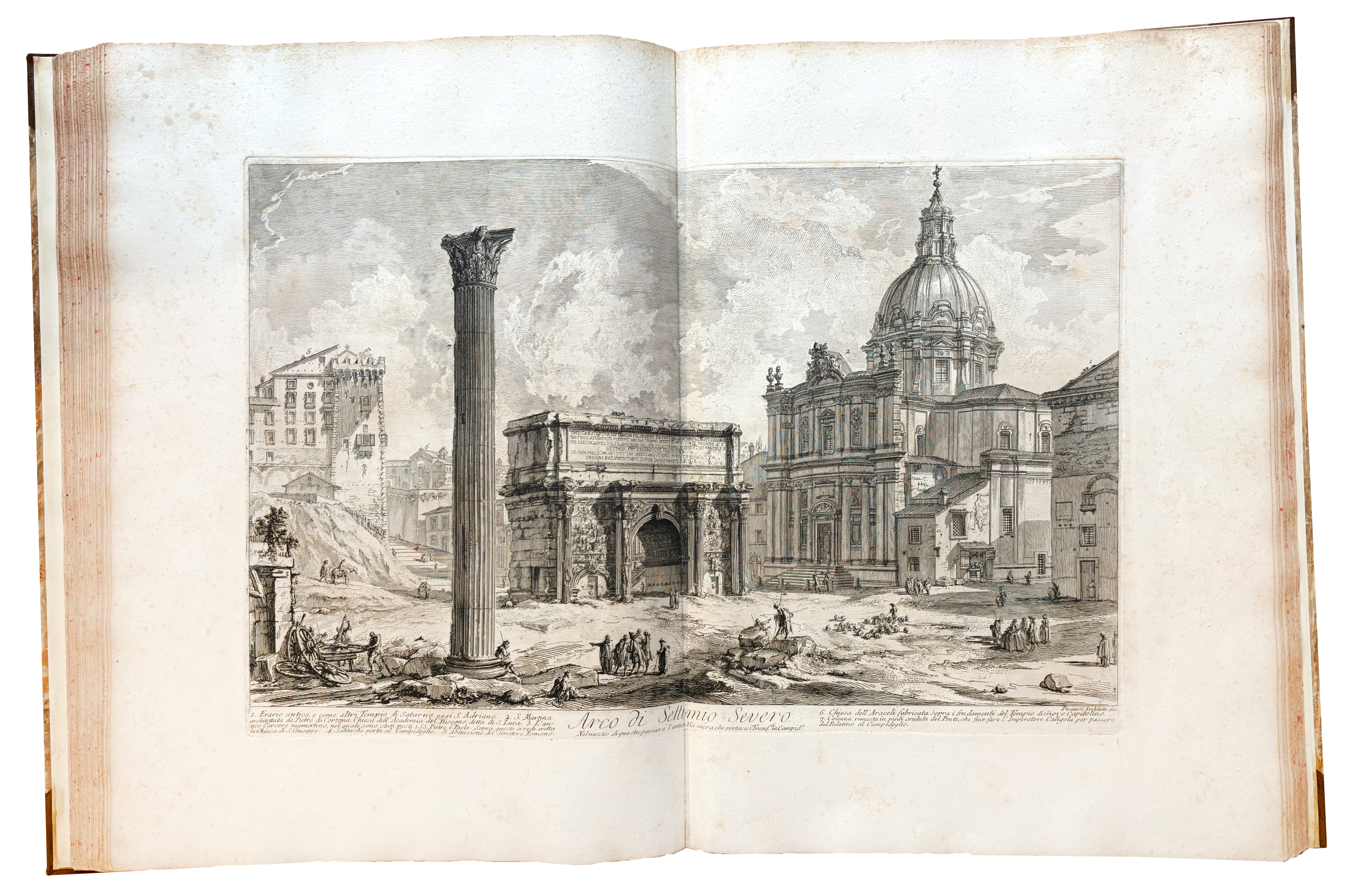
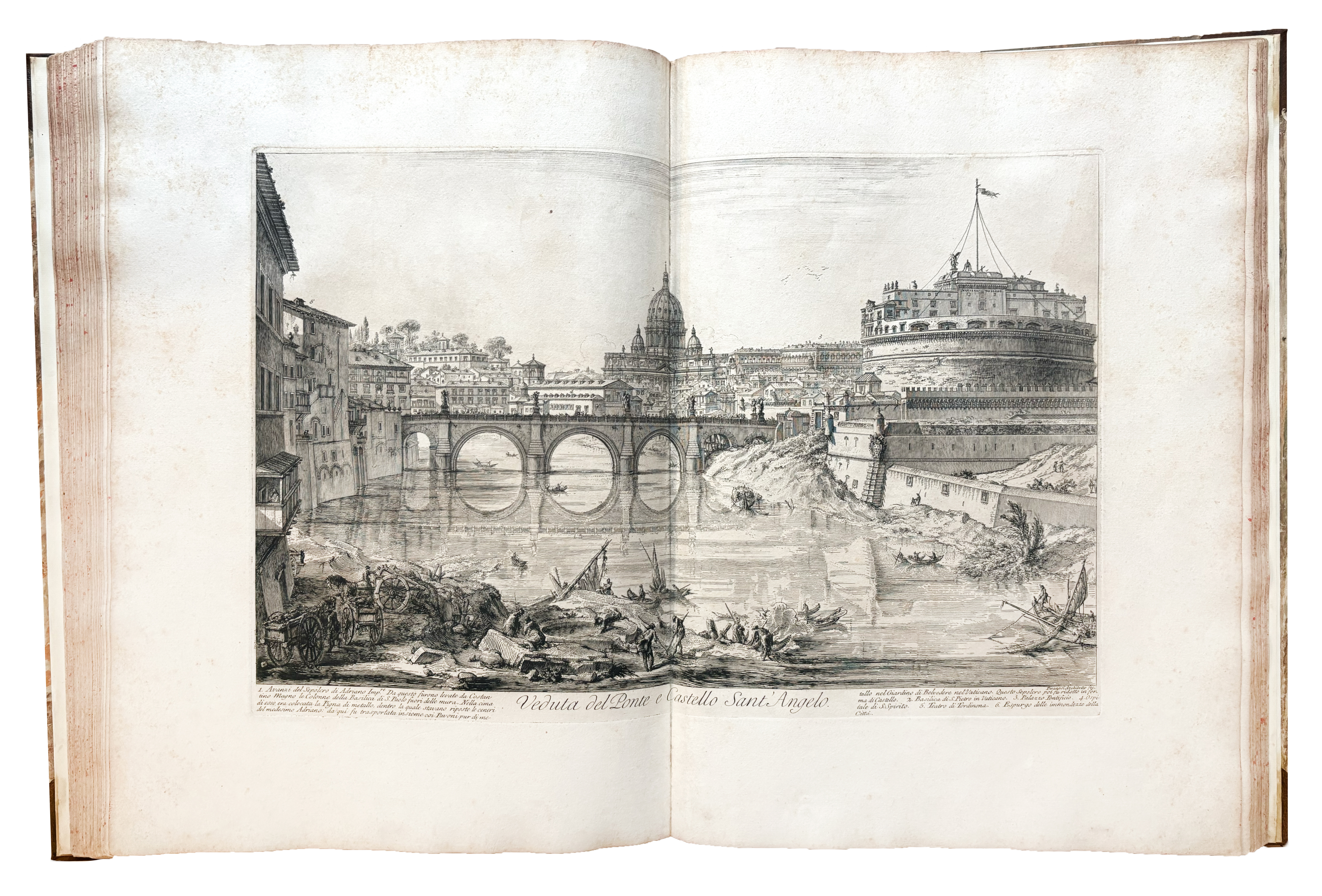
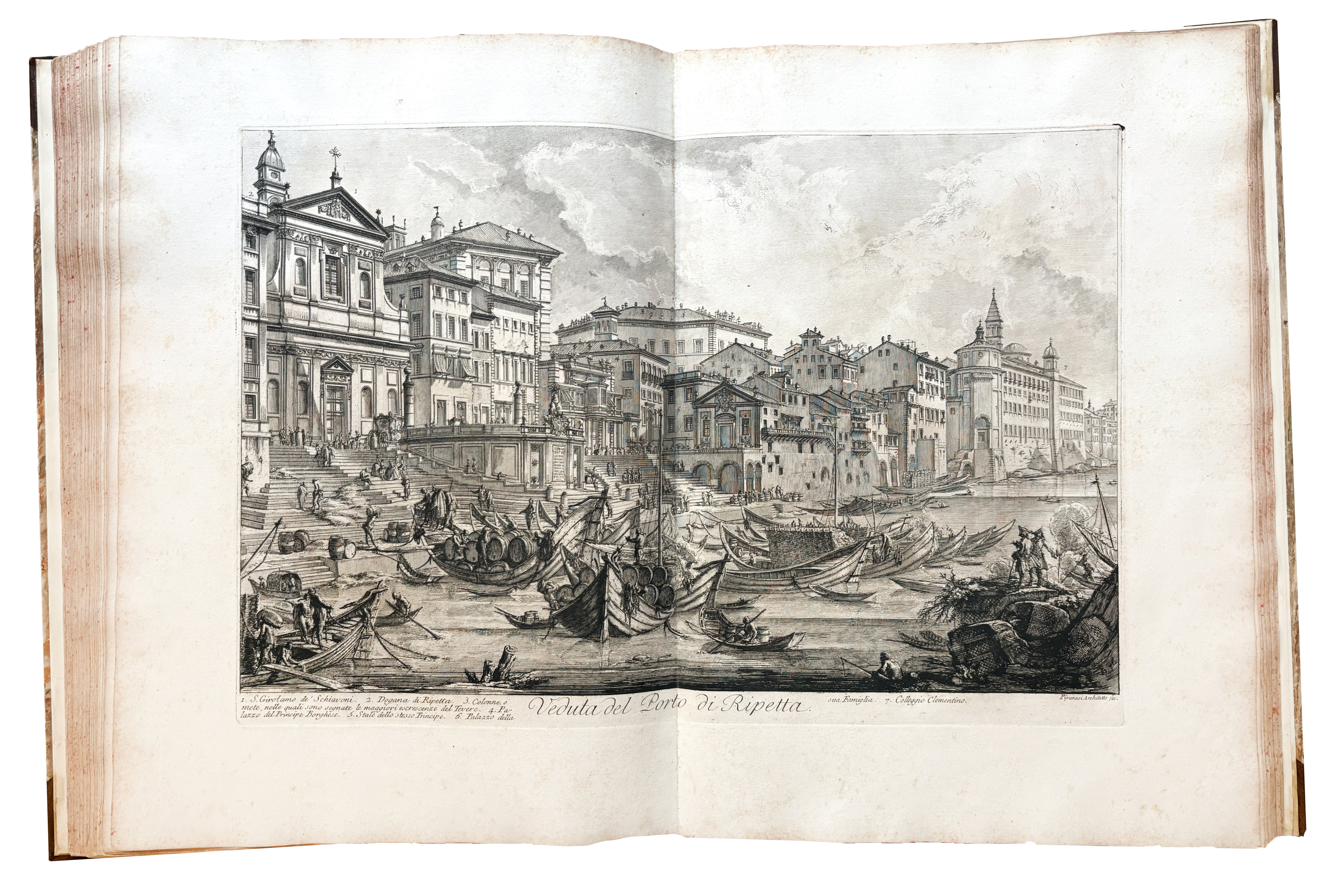
An important milestone in the issue and dating of Piranesi's vedute: a discrete collection of all the prints, the majority in first state, for the 'Vedute di Roma' that Piranesi had published by 1754.
'The Vedute di Roma constitute Piranesi's magisterial achievement ... '. (Millard).
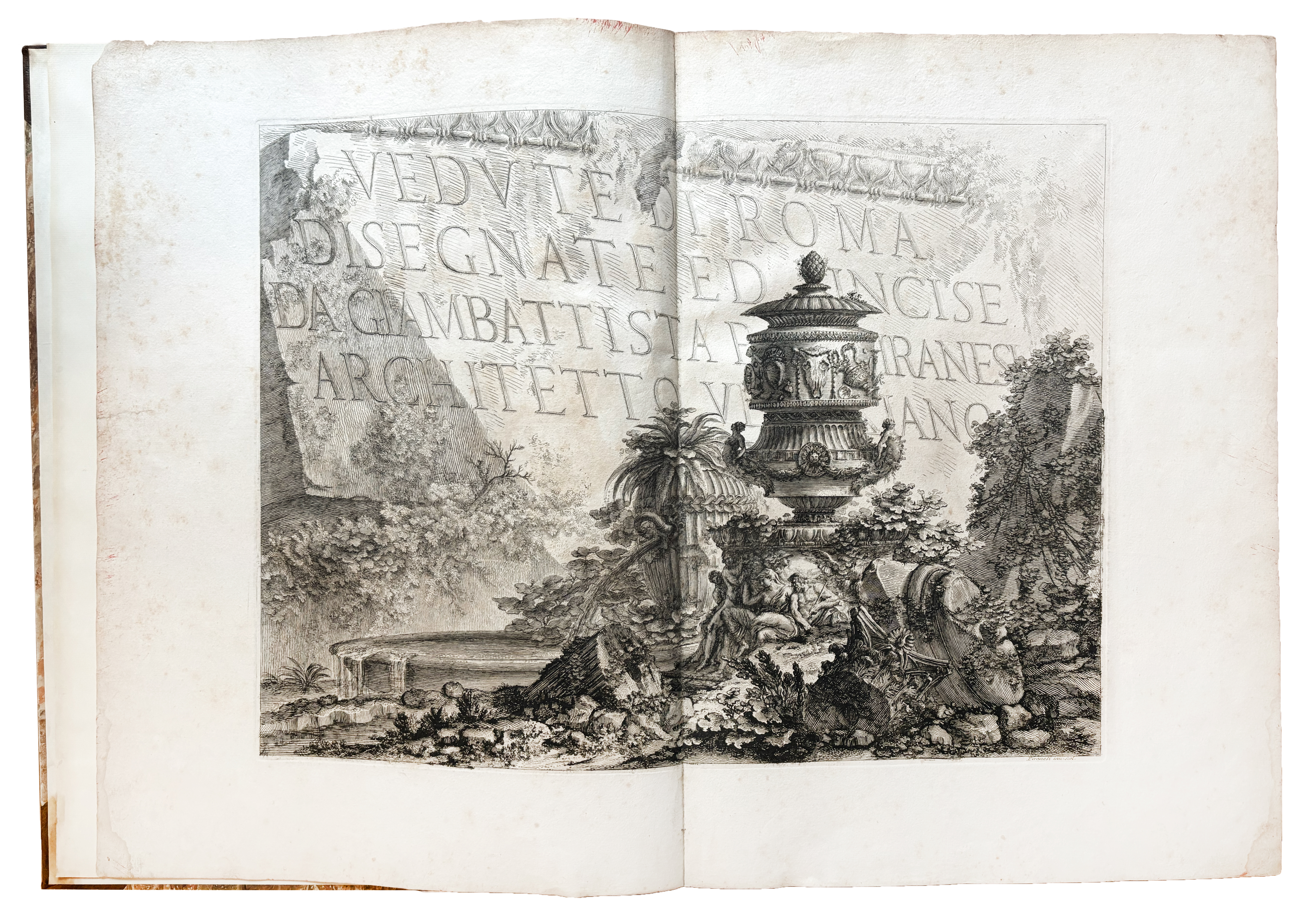
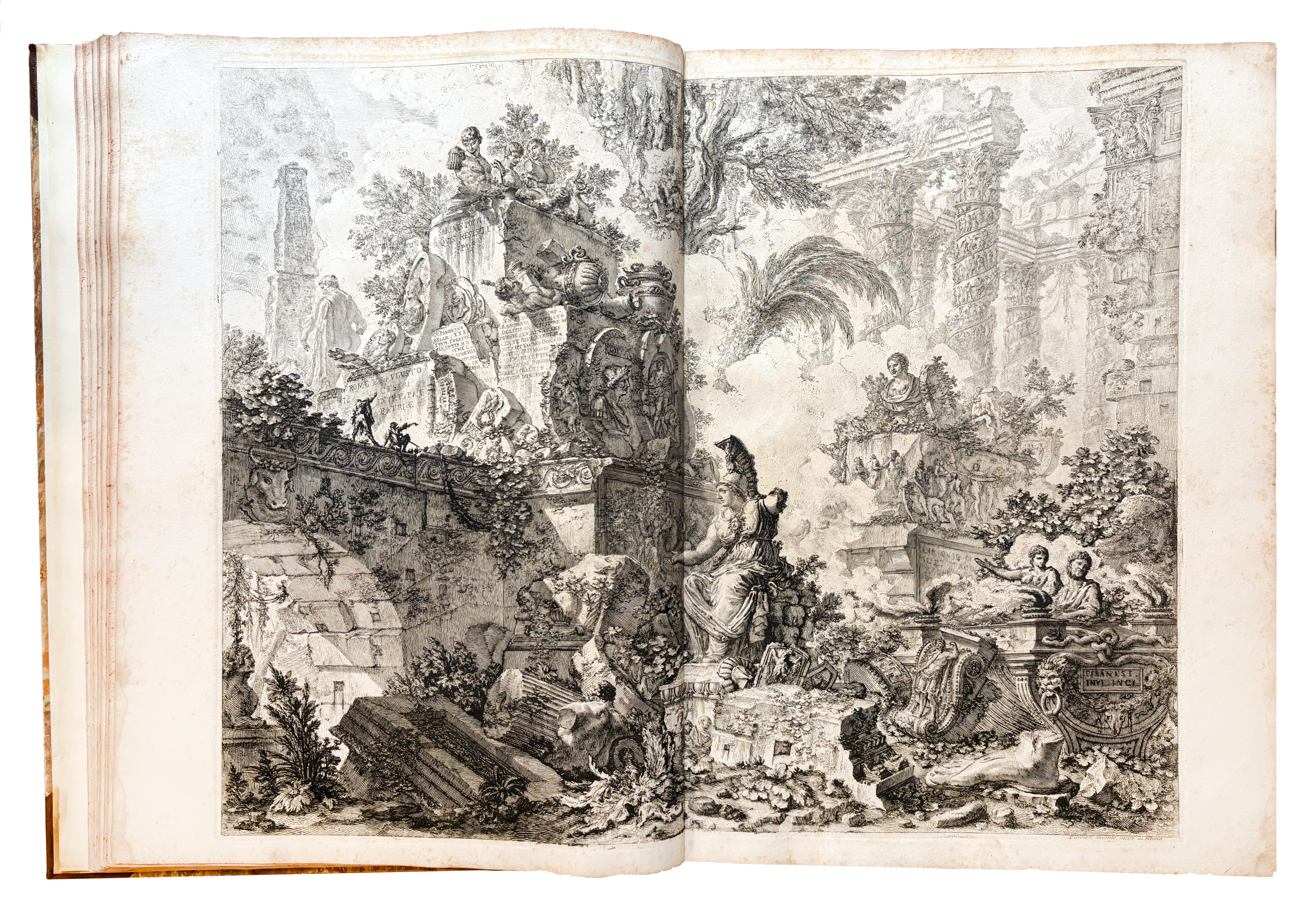
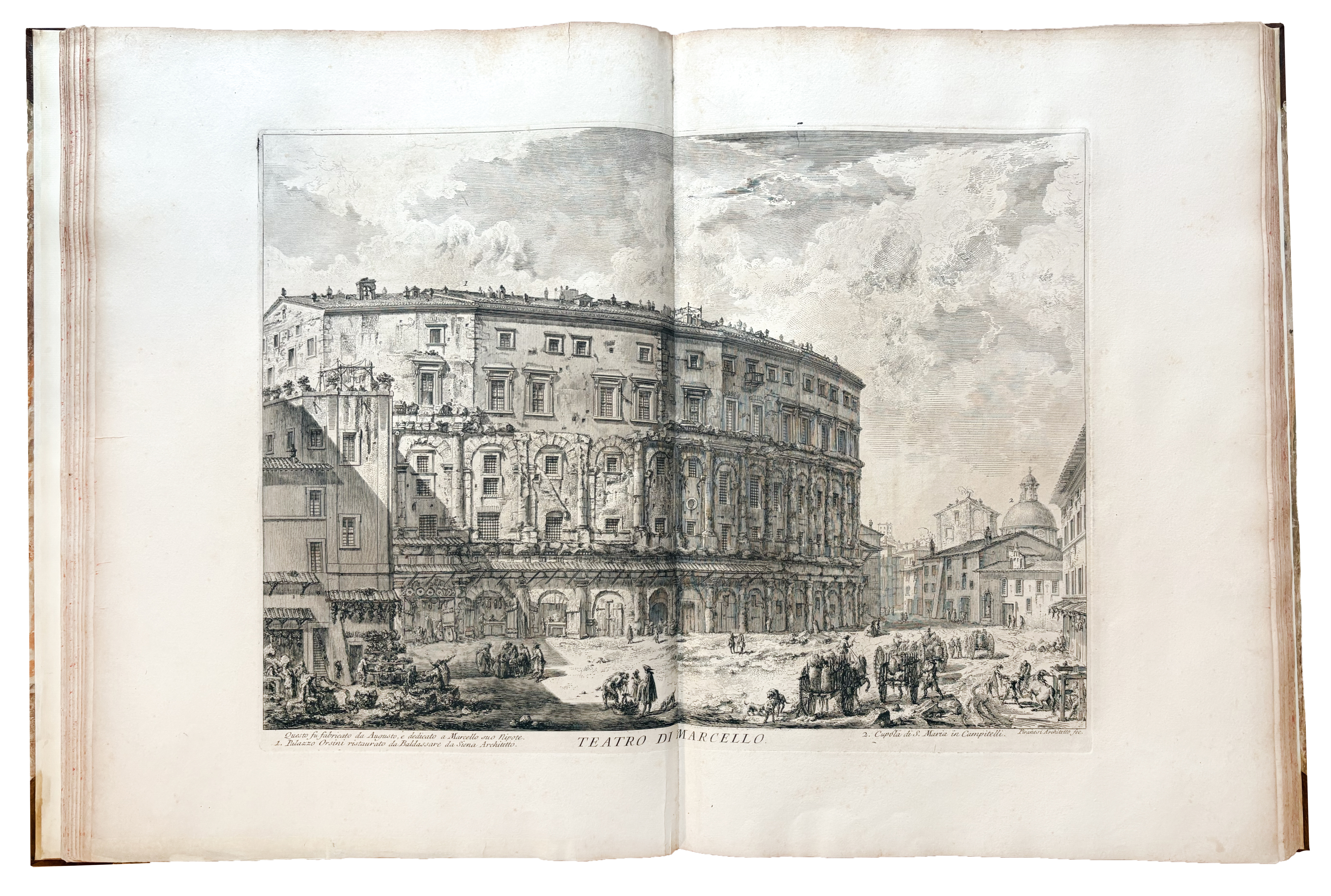
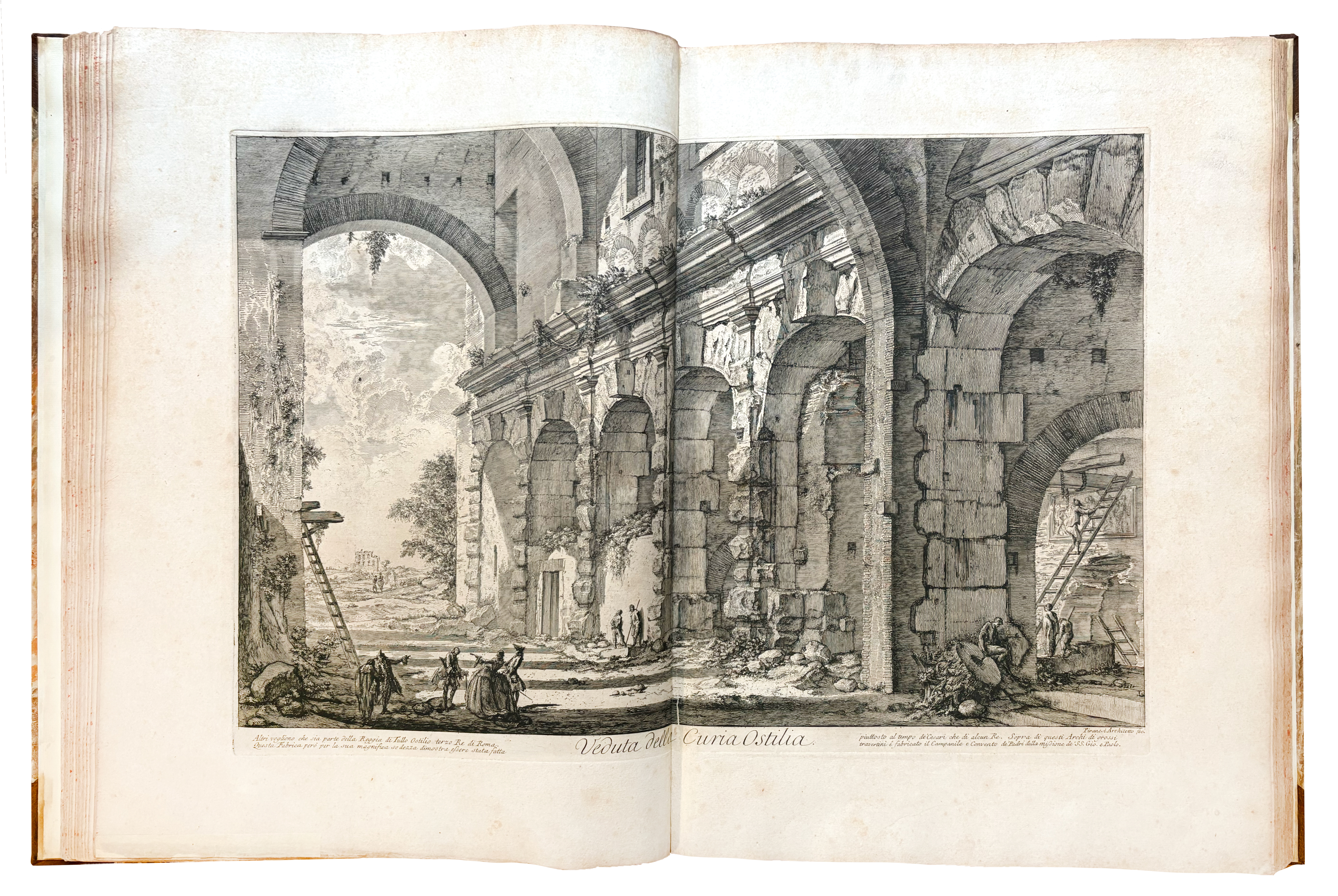
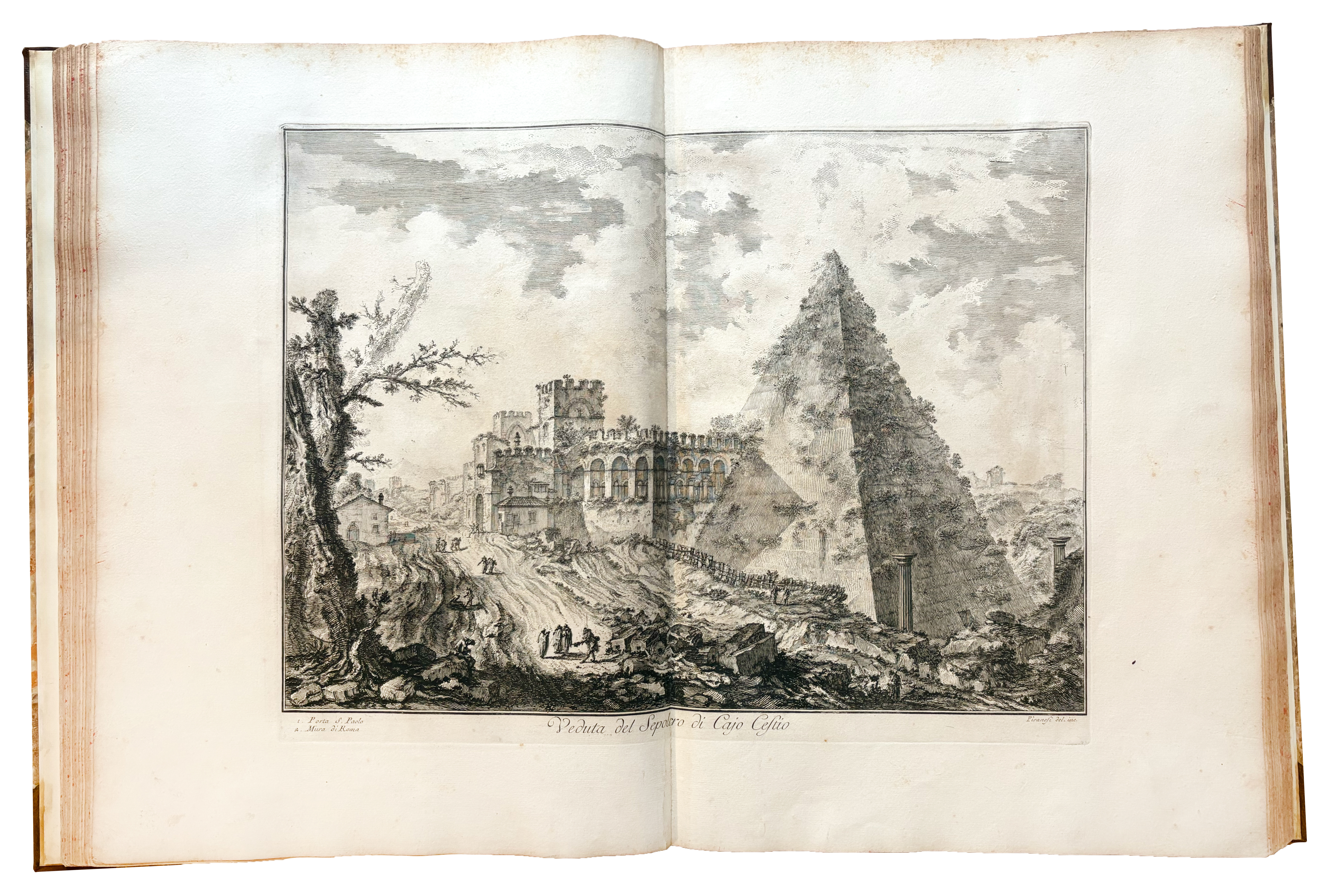
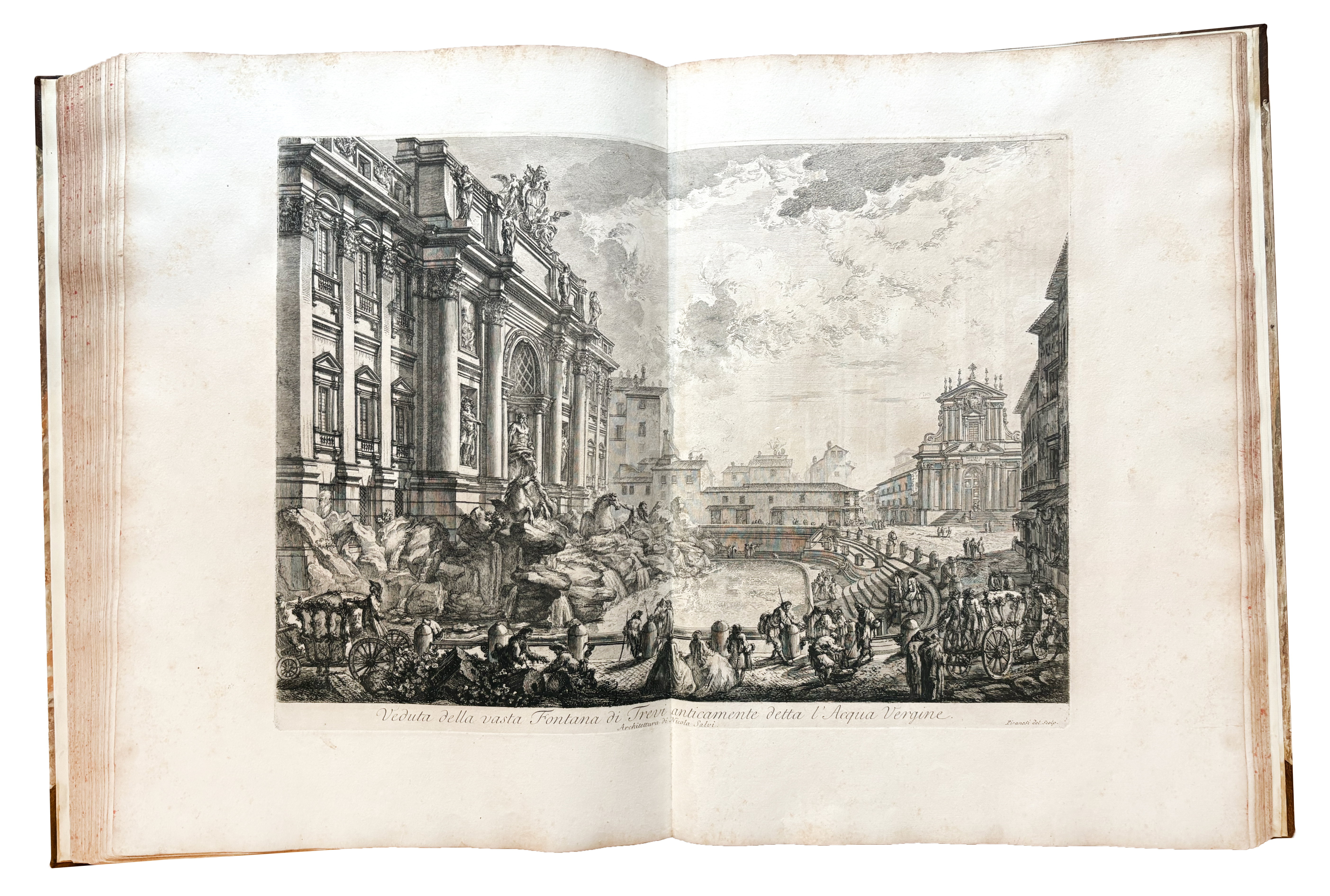
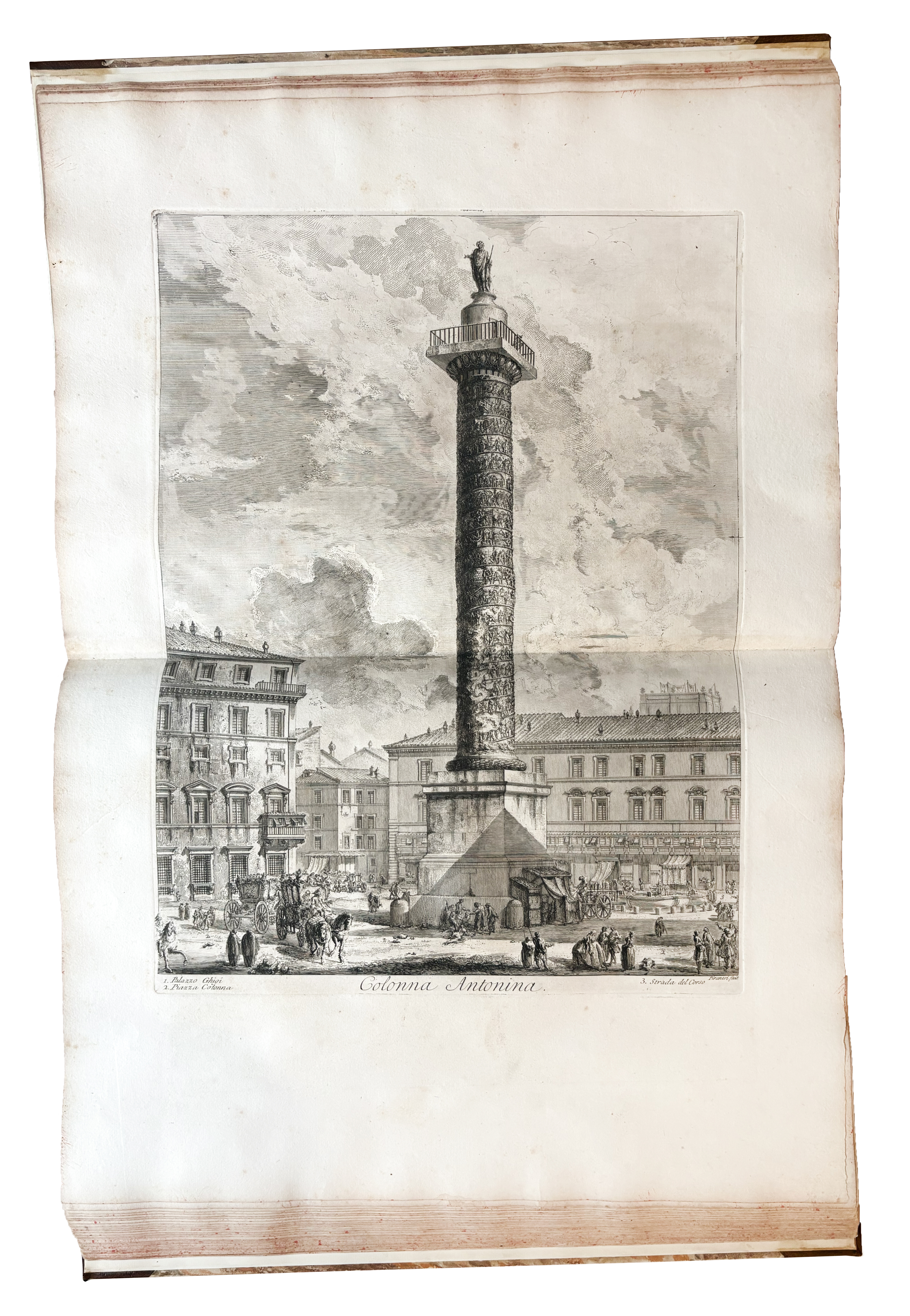
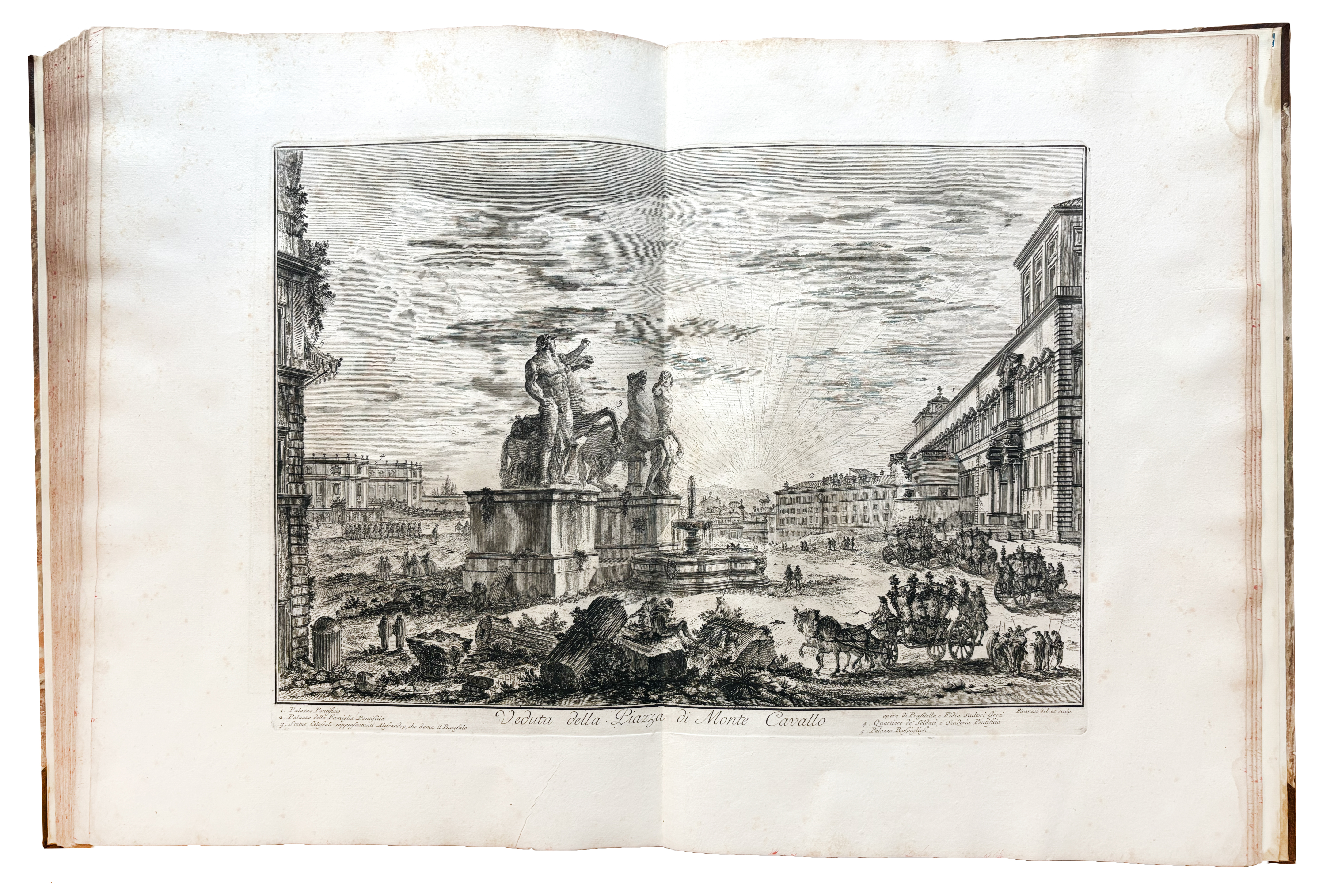
The plates of the 'Vedute di Roma' present an anthology of the principal monuments of the Eternal City: in these etchings the colossal structures of antiquity were delineated with great accuracy, depicted in situ as they appeared in the mid-eighteenth century and shown ravaged by decay, neglect and vandalism. The set presented here, issued c.1754, is a very rare anthology of the 36 vedute (and the series title and frontispiece) that Piranesi had produced by that date; he went on to produce successively a total of 135 vedute - with notable changes throughout in Piranesi's technique, subject and ability - over the course of the next three decades. As such these are very early impressions and differ markedly from those issued later. Early impressions are very rare and retain a silvery tone and a clarity of detail that is absent in subsequent issues and differs strongly from the darker, blacker tones in the later and posthumous printings. Robison refers to the production of these impressions: ' ... the plates lightly bitten, producing a soft and even light.'
The first extant grouping of vedute by Piranesi, there are ten plates, occurs in an album in the Biblioteca Apostolica Vaticana that includes proofs on Venetian paper, all subsequent details refer to impressions on Roman paper; the second, at Chatsworth in an album titled 'Prints 51', features 14 plates; the third, with 19 plates, is at Princeton. It must be noted that all of these groupings include the title and the frontispiece, i.e. Hind 1 and Hind 2, as well as the early vedute. These three are followed by an example of the 'Opera Varie' from 1750 in the Metropolitan Museum that includes 26 vedute and eight copies of Piranesi's 'Le Magificenze di Roma', the early issue with the title dated 1751 that always includes a number of the vedute. Pace Andrew Robison: 'Some of these copies contain more, but none of these contains less than 34 Vedute; and all of these known copies contain exactly the same 34 Vedute. The inference seems very safe that these 34 are exactly and all the Vedute Piranesi had completed by the original date of publication of 'Le Magnificenze', 1751.'
Next in the groupings comes the second issue of 'Le Magnificenze di Roma' published with 36 vedute, the 34 of the previous issue plus two new plates. As this edition included other works including the 'Trofei di Ottaviano Augusto' it was likely published in 1753. Our version, with 38 plates, is the next discrete grouping described by Robison and is comparable to an example now in the Bibliothèque Nationale (it was formerly in the Royal Library). He cites a further example, albeit disbound, seen at the Christopher Mendez Gallery in London in 1976. Robison notes too, in discussion of the plates added to the series for this issue, that ' ... Piranesi thus begins to make the architecture more monumental not only through relative size and composition but also through this enhanced chiaroscuro.' Although there may be other uninspected examples it seems clear that given the rate of Piranesi's production, the catalogo given in 'Le Antichità Romane' (1756) and the etched catalogue of 1761, not to mention Robison's own arguments for the dating of the issue of groups of vedute, that this series of 38 vedute does comprise an important discrete issue on its own terms.
The dating and issue of the successive discrete issues of the Vedute - up to and including the present album - are as follows (the numbers given are those in Hind and those added for each successive group are marked with a star ('*'), those in Roman numerals and the dates before each are those given by Robison; at the time of writing Robison had not described the Vatican album and it is therefore marked as 'I*'):
I*. (1745? / 1746?) - album in the Biblioteca Apostolica Vaticanum - 10 plates (including proofs on Venetian paper): 1 (Title), 2, (Frontispiece), 3, 8, 9, 19, 35, 38, 40, 56;
I. (1746? / 1748?) - Chatsworth 'Prints 51' - 14 plates: 1 (Title), 2 (Frontispiece), 3, 8 , 9, *14, *15, *16, *17, 19, 35, 38, 40, 56;
II. (1748? / 1749?) - Princeton album - 19 plates with 5 added: 1 (Title), 2 (Frontispiece), 3, *4, *7, 8 , 9, 14, 15, 16, 17, 19, 35, 38, 40, *50, *51, *52, 56;
III. (1749? / 1750) - Metropolitan Museum 'Opere Varie' - 26 plates with 7 added: 1 (Title), 2 (Frontispiece), 3, 4, 7, 8 , 9, 14, 15, 16, 17, 19, *33, 35, *37, 38, 40, *41, *45, *49, 50, 51, 52, *53, *54, 56;
IV. (1750 / 1751) - 'Le Magnificenze di Roma' (1751) - 34 plates with 8 added: 1 (Title), 2 (Frontispiece), 3, 4, *5, 7, 8 , 9, 14, 15, 16, 17, *18, 19, *28, *29, 33, 35, 37, 38, 40, 41, *43, 45, *46, 49, 50, 51, 52, 53, 54, 56, *58, *59;
V. (1751 / 1753) - 'Le Magnificenze di Roma' (c.1753) - 36 plates with 2 added: 1 (Title), 2 (Frontispiece), 3, 4, 5, 7, 8 , 9, 14, 15, 16, 17, 18, 19, 28, 29, *32, 33, *34, 35, 37, 38, 40, 41, 43, 45, 46, 49, 50, 51, 52, 53, 54, 56, 58, 59;
VI. (1753 / 1754) - Bibliothèque Nationale / Mendez / this copy - 38 plates with 2 added: 1 (Title), 2 (Frontispiece), 3, 4, 5, 7, 8 , 9, 14, 15, 16, 17, 18, 19, 28, 29, 32, 33, 34, 35, 37, 38, 40, 41, 43, *44, 45, 46, *47, 49, 50, 51, 52, 53, 54, 56, 58, 59.
'Piranesi etched his large 'Vedute di Roma' as a continuing series with new increments added periodically throughout his mature life. With one exception, he did not engrave dates on the individual Vedute. Thus, the specific dating has long been a problem.' (Andrew Robison).
'In general it is characteristic of these views that their focal architecture are located in the middle to distant ground, seen as wholes firmly set into a landscape. Beside the focal architecture Piranesi gives equal emphasis to the environment of other buildings and to the staffage of figures and machines and everyday happenings. The figures and costumes are drawn in some detail and consist especially of elegant gentlemen and ladies with rococo carriages or of tattered beggars with mangy dogs. In the Piazze Novona and Rotunda he adds a catalogue of tradesmen and characters in various activities, selling furniture, fish, and other food, declaiming to crowds, cooking, and playing dice.' (Andrew Robison).
'One of the most distinguished and prolific graphic artists of the eighteenth century, Giovanni Battista Piranesi (1720 - 1778) has had a lasting influence upon the representation of Rome, the commercial practices of artists, and the uses of antiquity. An exceptional personality, Piranesi transfigured his personal failure as an architect by re-creating ancient Roman architecture and urbanism through a richly complex representation.' (Millard).
A full list of the individual vedute and their states is available on request.
[see Andrew Robison's 'Dating Piranesi's Early 'Vedute di Roma' (pp. 11 - 33) in 'Piranesi Tra Venezia e l'Europa', Florence, Leo. S. Olschski, 1983; see Robert Battaglia's 'A First Collection of the 'Vedute di Roma': Some New Elements on the States' (pp. 93 - 119) in 'The Serpent and the Stylus: Essays on G. B. Piranesi', Rome, American Academy in Rome, 2006; for details of the individual plates in Hind please see the full list of plates; Millard 86, see also pp. 297 - 316; see A. M. Hind's 'Giovanni Battista Piranesi: A Critical Study ... &c.', London 1922].
Folio. (543 x 412 mm). Title, frontispiece and 36 engraved plates by Giovanni Battista Piranesi, early impressions before address, the majority first state (two in second state), identified watermarks conform to Robison 5 / Hind 1 (fleur-de-lys within a single circle); sheet size: 535 x 395 mm (folded), 535 x 766 mm (unfolded). Later tan morocco-backed marbled boards by Buchbinderei Koelliker of Basel with their ticket to rear pastedown, banded spine with red morocco label with gilt title 'PIRANESI / VEDUTE / DI / ROMA' in eight compartments.
#48969