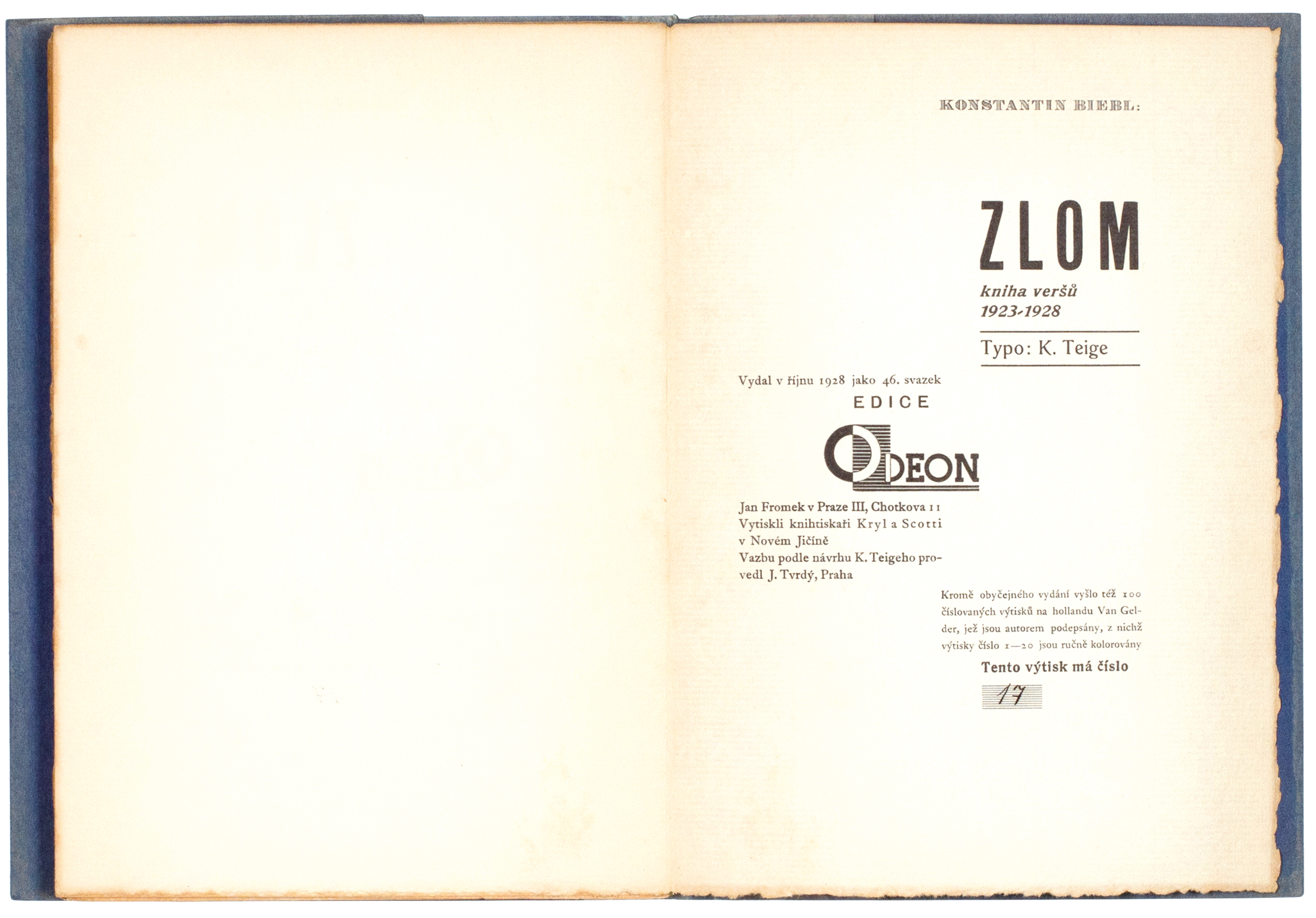
ZLOM. Nové Vydání. (Rupture. New Edition)
Teige, Karel. Biebl, Konstantin
Prague. Edice Odeon. 1928
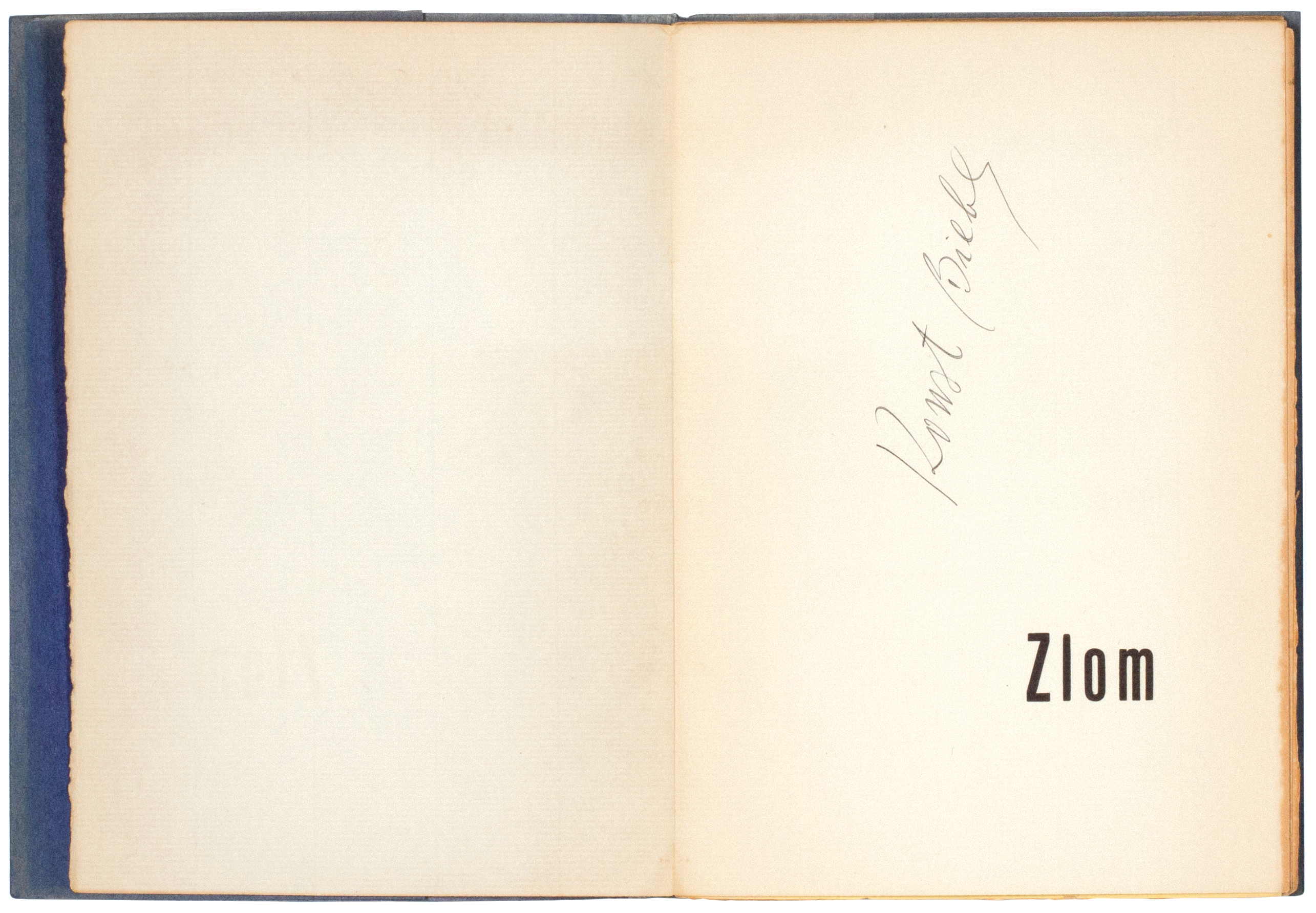
The very rare édition de tête of this second edition of 'ZLOM' designed by Karel Teige, signed by Biebl and Teige and with all of Teige's compositions with additional colour heightening by hand.
From the edition limited to 100 copies on Hollande Van Gelder numbered in ink, with this one of the first 20 copies signed by Biebl to the half-title and Teige to the frontispiece and with all of Teige's compositions with additional colour by hand; the remaining 80 copies also issued on Hollande van Gelder feature the same cover as this version but are without Teige's colouring by hand while an issue of 1500 copies on ordinary paper with a different cover was also published.
'Kromĕ obyčejného vydání vyšlo též 100 číslovaných výtisků na hollandu Van Gelder, jež jsou autorem podepsány, z nichž výtisky čislo 1-20 jsou ručnĕ kolorovány.' (From the justification).
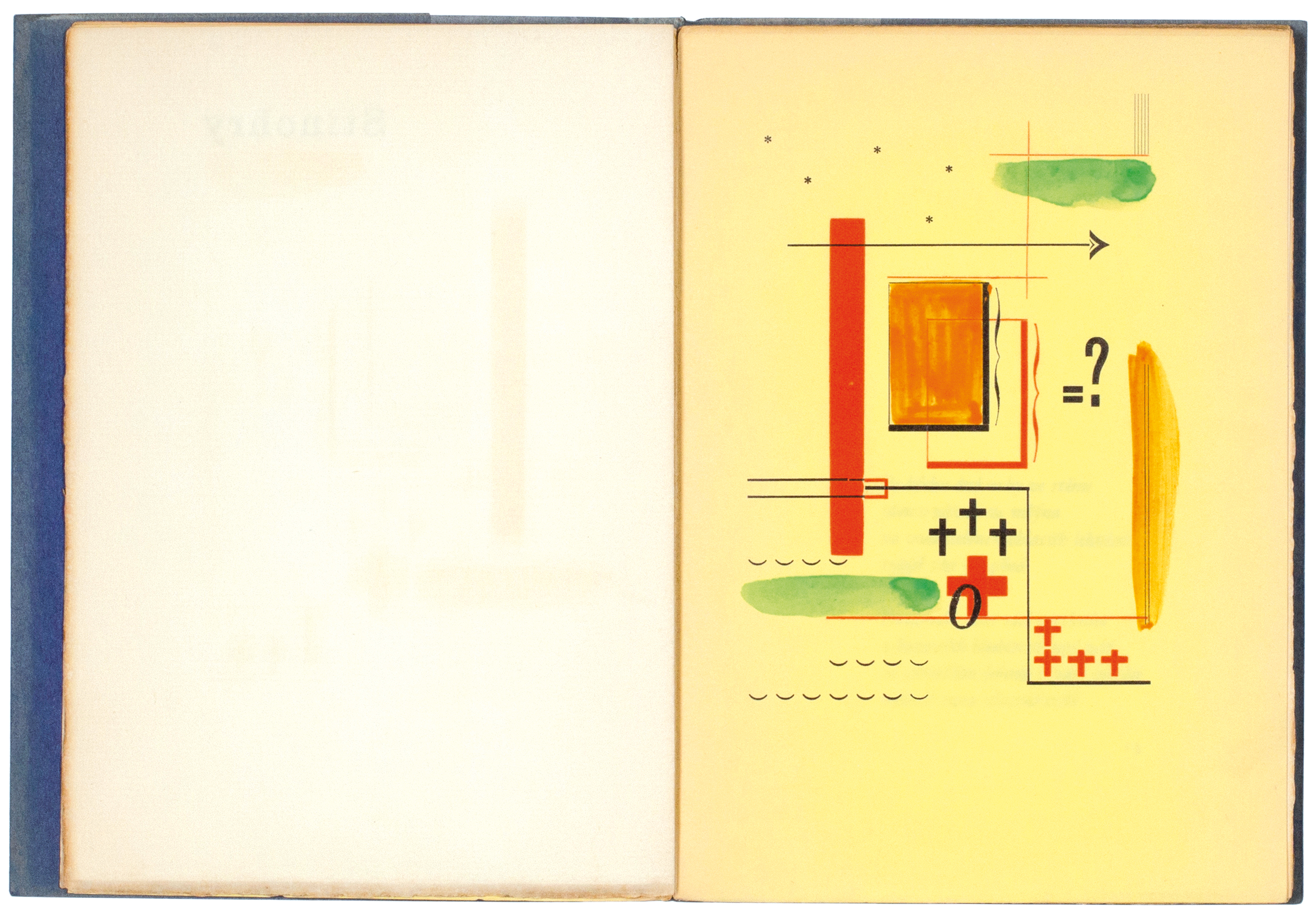
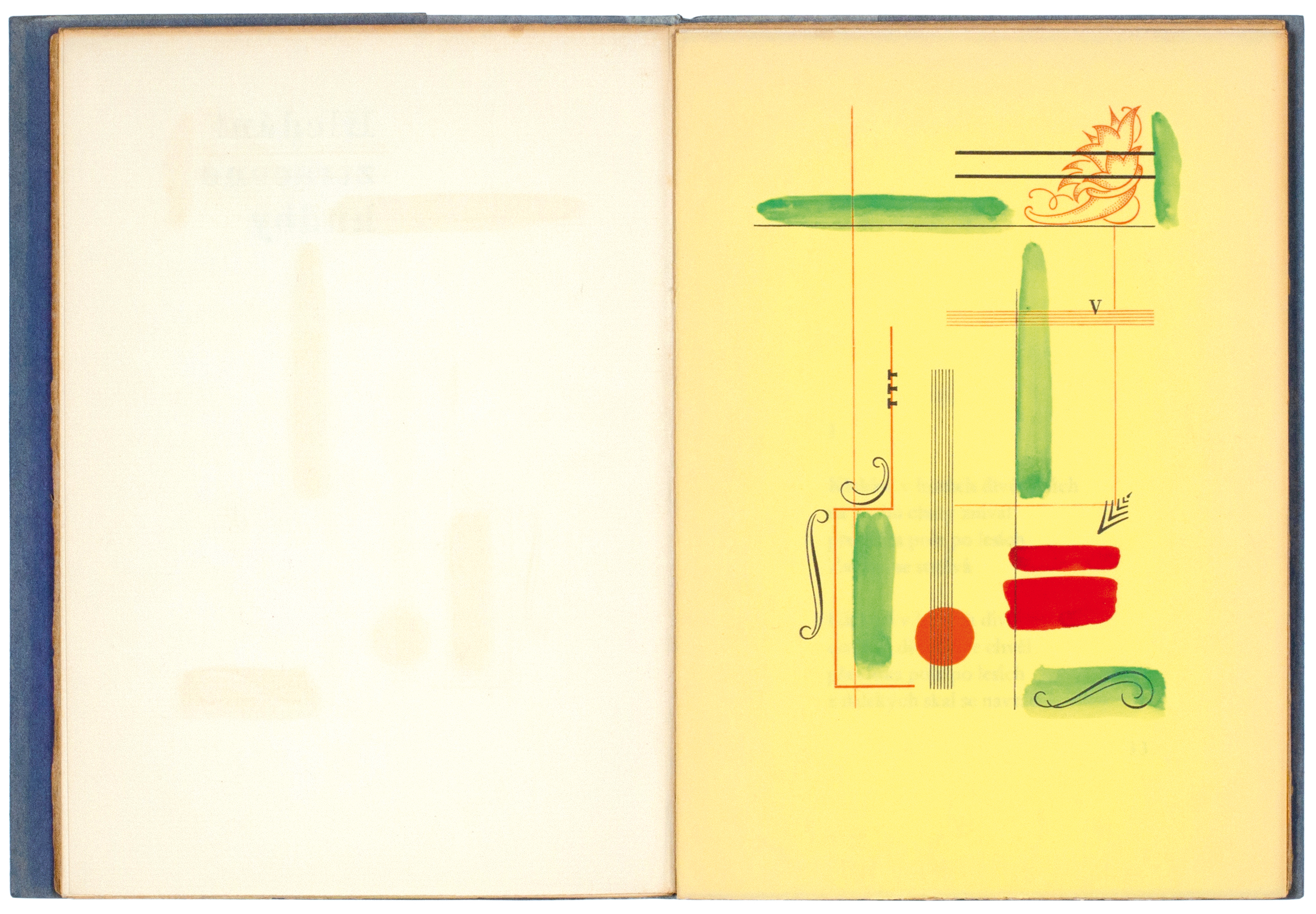
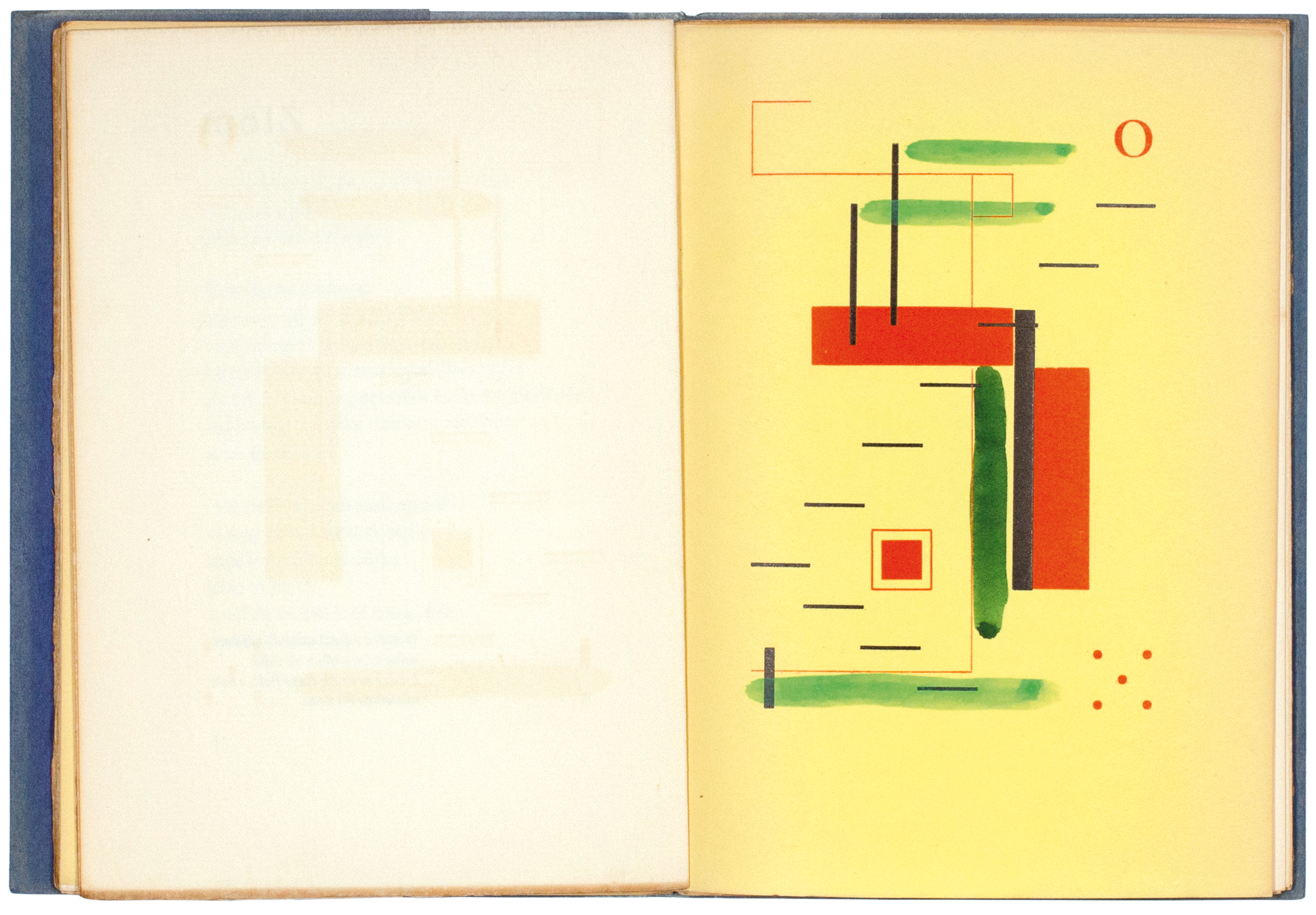
First published in 1925, 'Zlom', Biebl's Surrealistic collection of poems were published in this edition, itself designed by Teige, for the first time in 1928. The three sections of the collection, 'Stinohry', 'Hledàni Ztracené Hudby' and 'Zlom' itself, are each introduced by one ofTeige's typographic compositions, all on yellow paper and printed here for the first time. Both Biebl and Teige were members of 'Devětsil', the Czech avant garde literary and artistic group that also included Nezval, Toyen, Seifert, Styrsky and many others who also founded the Czech Surrealist Group.
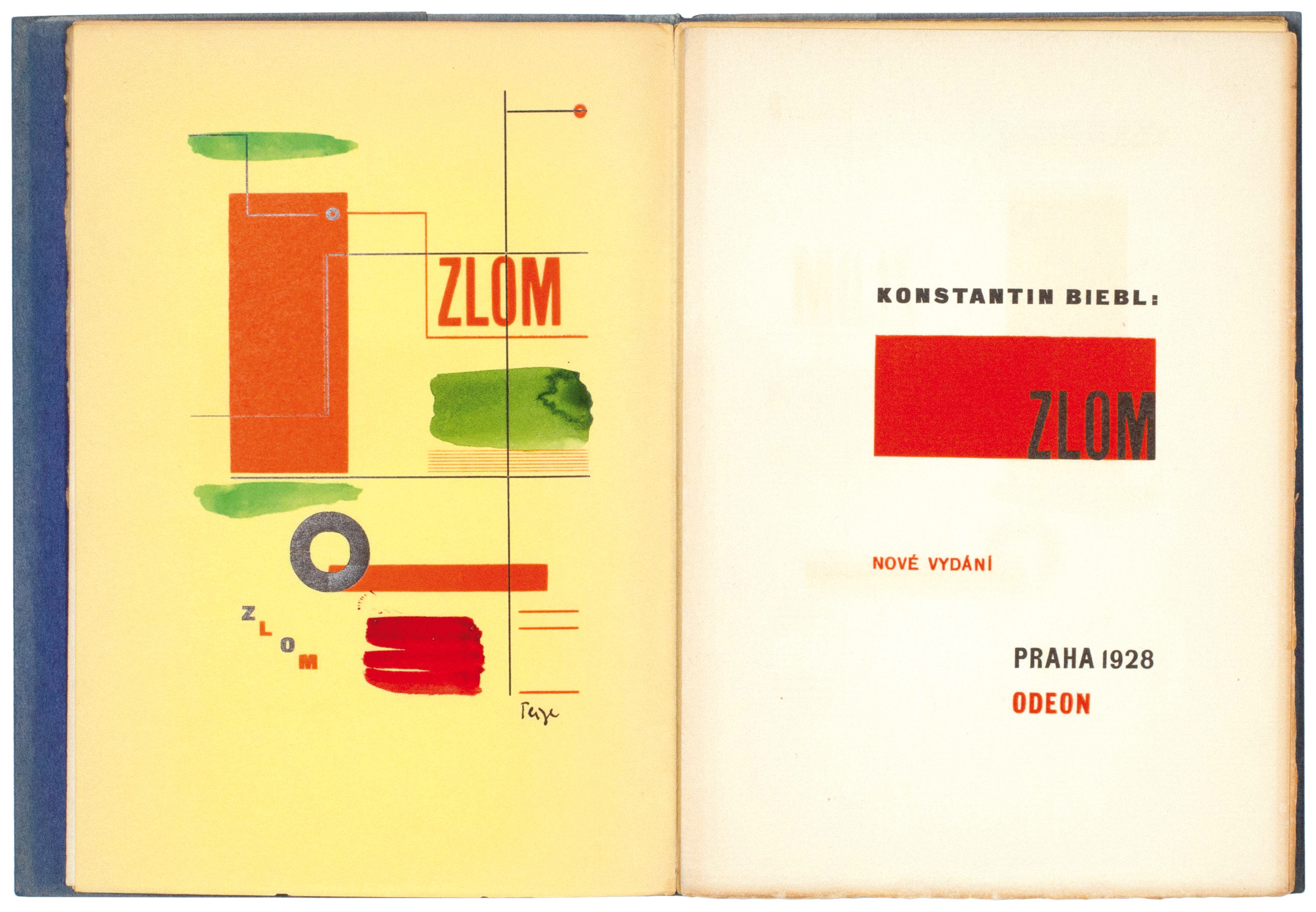
'ZLOM', like its companion volume 'S lodí jez dovází caj a kávu' also with verse by Biebl, is considered one of the avatars of Czech avant garde book production and a triumph of design by Karel Teige. The composition of 'ZLOM' differs from 'S lodí jez dovází caj a kávu', in colour and in the use of more decorative elements: stars, braves, etc. The title page, here printed in red and black, is also different in being an almost functional design. Each of the compositions by Teige feature additional colour by hand, simple but assured interventions by the artist and designer that augment his typographic imagery of lines and ornaments with additional lines of highlighting and reinforcement. Needless to say, each of the 20 copies with these interventions by Teige is unique; equally it is self-evident that these copies are of the utmost rarity.
'A year after the publication of 'On the Ship that Brings the Tea and Coffee', a revised edition of Biebl's poetry collection 'Zlom' (Break) was issued, in October 1928 ... Teige's illustrations were characterised by a spiritual and lyrical quality. For the title of the collection, Teige chose the Grotesque typeface. He printed the illustrations in red and black on yellow stock. The first illustration closely followed its literary model. Between a starry sky and a surface of water, one sees cemetery crosses and rectangles representing empty graves to which a question mark is assigned rathe than names. The references to musical instruments in the second illustration introduces the section 'Hledáni ztracené hudby' ('The Search for Lost Music'). The last illustration is the most abstract. In it, the diagonal, descending line segments seem to express the word 'break' ('zlom') in the title of the final section of the collection.' (Karel Srp and Lenka Bydzovska).
We locate a single example of this edition in this issue: the copy held by the Art Institute of Chicago (the number is unknown); the Metropolitan Museum's Thomas J. Watson Library holds a copy of the issue on Hollande without the additional colour by hand.
[see Karel Srp and Lenka Bydzovska's 'The New Alphabet' in 'New Formations: Czech Avant-Garde Art and Modern Glass from the Roy and Mary Cullen Collection', Houston, 2011].
From the edition limited to 100 copies on Hollande Van Gelder numbered in ink, with this one of the first 20 copies signed by Biebl to the half-title and Teige to the frontispiece and with all of Teige's compositions with additional colour by hand; the remaining 80 copies also issued on Hollande van Gelder feature the same cover as this version but are without Teige's colouring by hand while an issue of 1500 copies on ordinary paper with a different cover was also published.
'Kromĕ obyčejného vydání vyšlo též 100 číslovaných výtisků na hollandu Van Gelder, jež jsou autorem podepsány, z nichž výtisky čislo 1-20 jsou ručnĕ kolorovány.' (From the justification).
First published in 1925, 'Zlom', Biebl's Surrealistic collection of poems were published in this edition, itself designed by Teige, for the first time in 1928. The three sections of the collection, 'Stinohry', 'Hledàni Ztracené Hudby' and 'Zlom' itself, are each introduced by one ofTeige's typographic compositions, all on yellow paper and printed here for the first time. Both Biebl and Teige were members of 'Devětsil', the Czech avant garde literary and artistic group that also included Nezval, Toyen, Seifert, Styrsky and many others who also founded the Czech Surrealist Group.
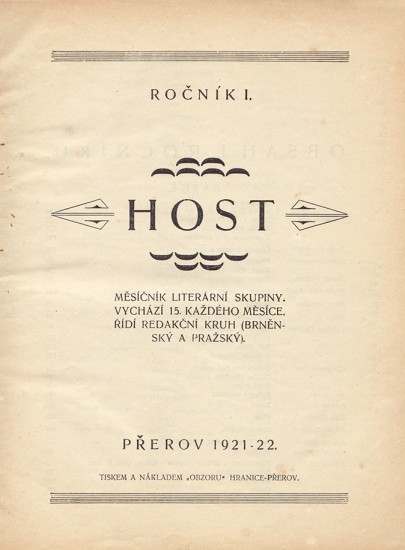
'ZLOM', like its companion volume 'S lodí jez dovází caj a kávu' also with verse by Biebl, is considered one of the avatars of Czech avant garde book production and a triumph of design by Karel Teige. The composition of 'ZLOM' differs from 'S lodí jez dovází caj a kávu', in colour and in the use of more decorative elements: stars, braves, etc. The title page, here printed in red and black, is also different in being an almost functional design. Each of the compositions by Teige feature additional colour by hand, simple but assured interventions by the artist and designer that augment his typographic imagery of lines and ornaments with additional lines of highlighting and reinforcement. Needless to say, each of the 20 copies with these interventions by Teige is unique; equally it is self-evident that these copies are of the utmost rarity.
'A year after the publication of 'On the Ship that Brings the Tea and Coffee', a revised edition of Biebl's poetry collection 'Zlom' (Break) was issued, in October 1928 ... Teige's illustrations were characterised by a spiritual and lyrical quality. For the title of the collection, Teige chose the Grotesque typeface. He printed the illustrations in red and black on yellow stock. The first illustration closely followed its literary model. Between a starry sky and a surface of water, one sees cemetery crosses and rectangles representing empty graves to which a question mark is assigned rathe than names. The references to musical instruments in the second illustration introduces the section 'Hledáni ztracené hudby' ('The Search for Lost Music'). The last illustration is the most abstract. In it, the diagonal, descending line segments seem to express the word 'break' ('zlom') in the title of the final section of the collection.' (Karel Srp and Lenka Bydzovska).
We locate a single example of this edition in this issue: the copy held by the Art Institute of Chicago (the number is unknown); the Metropolitan Museum's Thomas J. Watson Library holds a copy of the issue on Hollande without the additional colour by hand.
[see Karel Srp and Lenka Bydzovska's 'The New Alphabet' in 'New Formations: Czech Avant-Garde Art and Modern Glass from the Roy and Mary Cullen Collection', Houston, 2011].
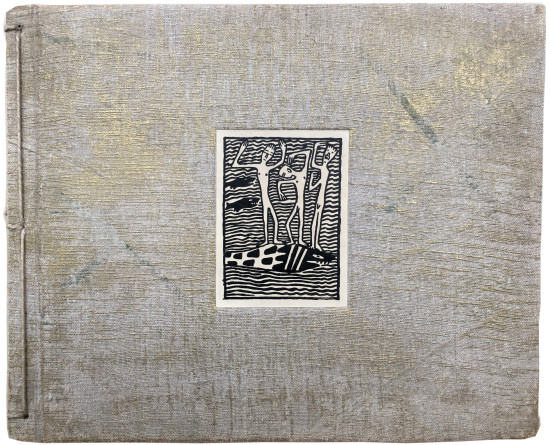
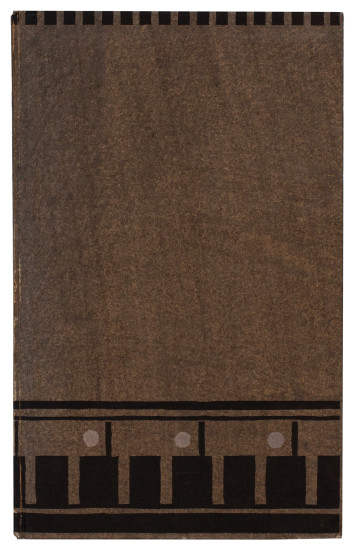
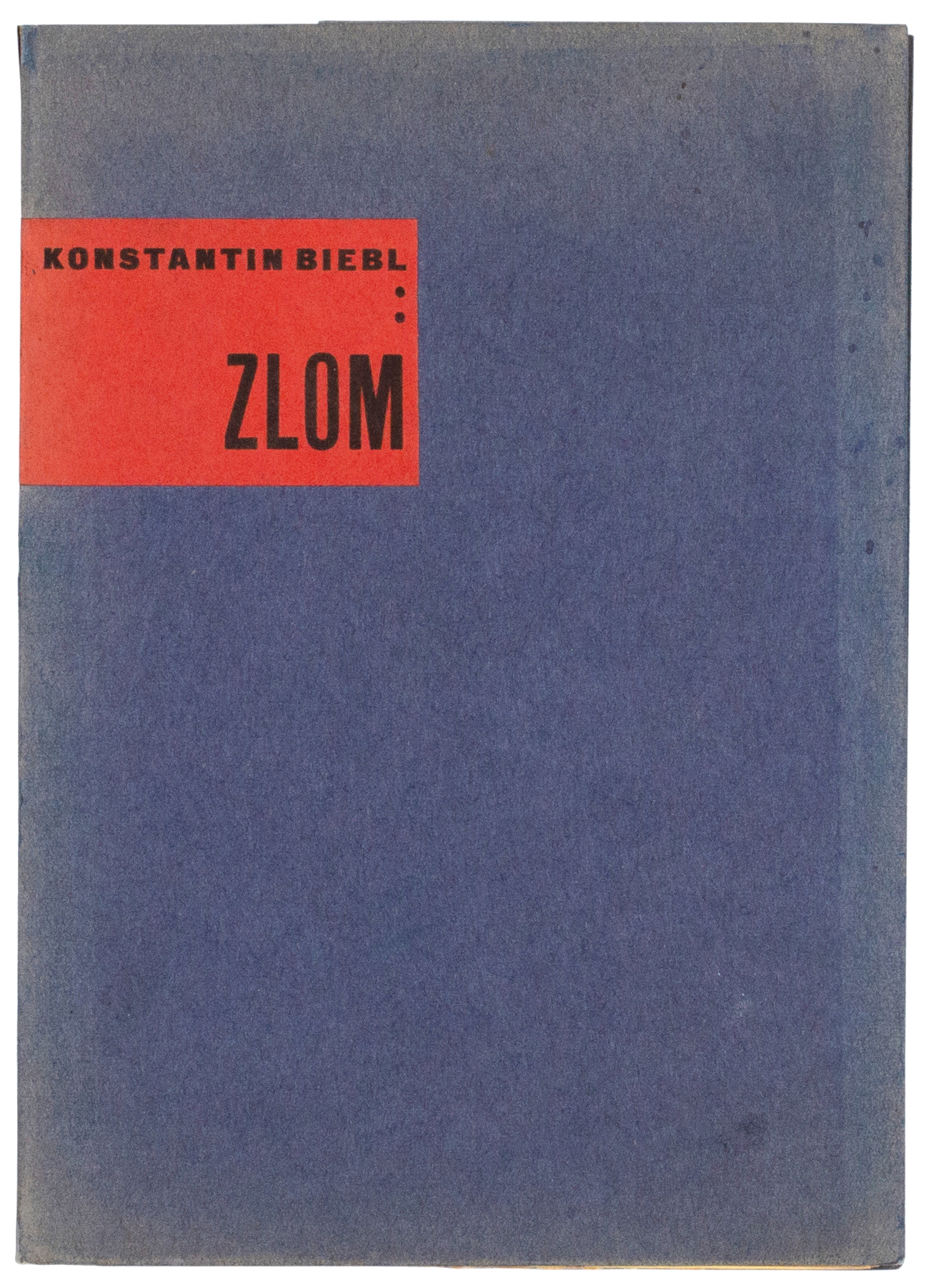
[30 leaves of Hollande + 2 bifolia of thin yellow stock = 34 leaves; pp. 64, (i)]. 8vo. (200 x 142 mm). Leaf with half-title signed by Biebl in black ink, leaf of yellow paper with Teige's typographic composition as frontispiece verso, signed by Teige in black ink and with extensive additional colour by hand, leaf with title in red and black recto, section title, leaf with Teige's composition recto and Biebl's verse in two further sections illustrated with two further compositions by Teige on yellow paper, final leaf with colophon and justification; typography and 4 colour typographical compositions by Teige - as well as the frontispiece they serve to introduce each section of verse - printed on yellow paper stock, each with additional colour heightening by Teige by hand in red, light green, dark green and orange watercolour. Loose as issued in original publisher's blue paper wrappers with flaps, red paper label with printed titles and credits pasted to front cover and folded over spine as issued.
#48802